Whole Bunch Fermentation
This is one of my favourite topics to write about, and I’m really looking forward to seeing how it develops as we keep making red wines. My understanding of it changes a little each time we try it. But first, let’s have a stab at what it actually is.
What is it?
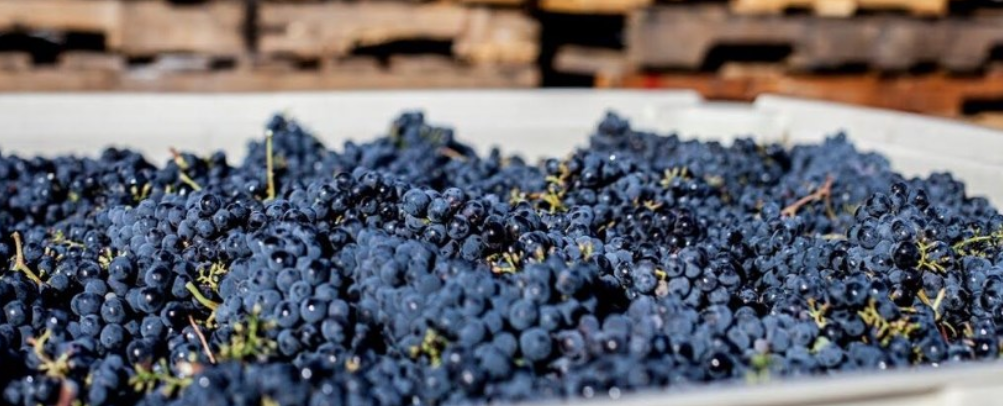
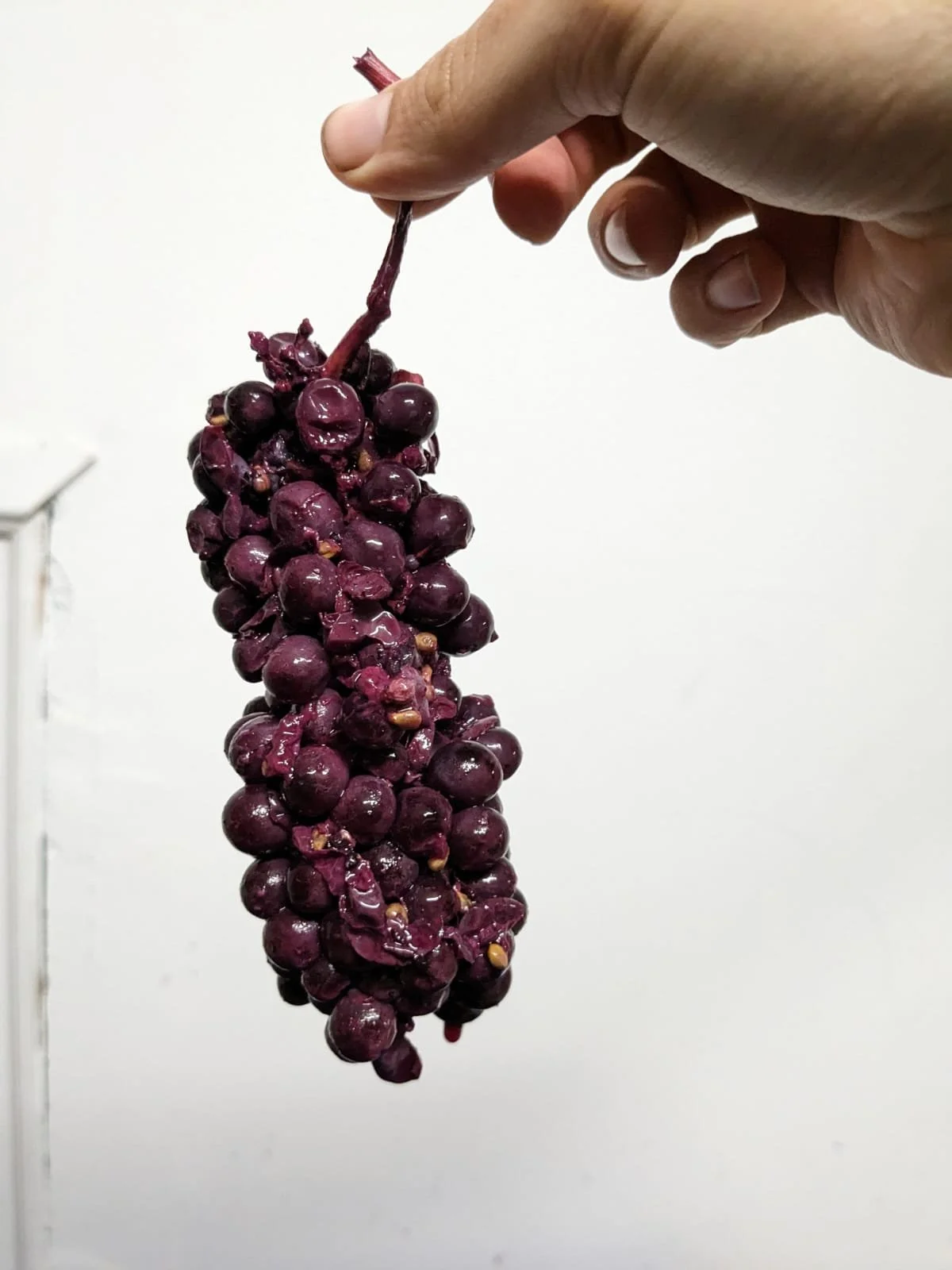
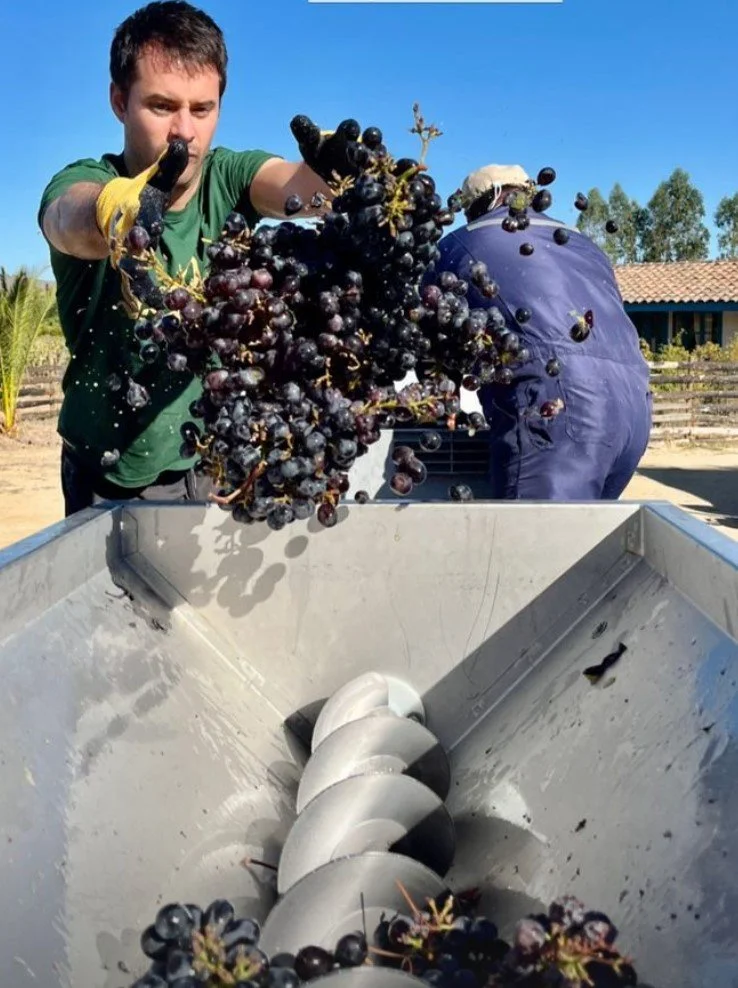
And it’s exactly what it sounds like! Instead of destemming the grapes before fermentation, you place some or all of the entire clusters, inlcuding berries, skins and stems, directly into the fermenter. The berries remain largely intact at the beginning, which means fermentation doesn’t start in quite the same way as it does with crushed fruit. Rather than one big soup of juice and skins, you have a more complex ferment: intact berries, crushed berries, pockets of juice, and a lattice of stems creating structure within the tank. This effects three things; the flavour this type fermentation creates, flavour directly from the stems and the rate/kinetics of the ferment.
The technique itself isn’t especially new. Historically, many wineries fermented grapes this way simply because destemming equipment didn’t exist. But Today it’s a deliberate stylistic choice rather than a logistical necessity, and seeing a resuragnce and peolpe arent so set on fruit forward styles.
Whole bunch around the world
It’s often associated with regions like Burgundy or the Rhône, mostly because of their affinity with Pinot Noir and Syrah. We’re looking at Malbec from Argentina now, but we have some experience of it around the world.
In Argentina, it’s still relatively uncommon, especially compared with places like Burgundy. Most Mendoza reds are fermented from destemmed fruit, partly because the varieties grown here, especially as Malbec and Cabernet Sauvignon are usually aimed at a fuller, fruit-driven style. That said, a small but growing group of producers have started experimenting with whole clusters, including a proportion of stems in Malbec ferments to add aromatic lift and structure. Some high-profile winemakers incorporate some whole bunches to create fresher, more nuanced expressions of the grape. It’s increasingly used in top red wines, including Catena Zapata’s top vineyards. Karim, however, doesn’t typically use it here, with the exception of Pinot Noir, where it’s performance is better known.
For us, it’s not completely theoretical as we’ve tried it before and in conditions similar to here. It worked beautifully in Chile, where it formed part of the blend that came out of Colchagua and really knocked our socks off. And the Dictator chucked in some whole bunch grenache to lift the freshness of the Sangiovese from the same region, as well as for the South African Barbera after the people’s request for a lighter style. Matt in Chile had originally said he didn’t use whole bunch, but we persuaded him to give it a go. And the results were good, particularly emotionally for me as it was the first time I had the guts to veer away from a tried and trusted house style. We also used it in California, although that was with Pinot Noir, where the technique is far more common, it was still not a method taken on by Darcie Kent Vineyards,. On the other hand, we deliberately avoided it with Nebbiolo in both Australia and Italy, on advice from people far more experienced who were very clear about how it works with that grape.
3am’s not late, Liv Elson 2025
She did this for my wedding last year, a gift commissioned by our friends. Taking inspiration for a phrase that apeared in the early hours and epitomises Dee N rather well.
So which grapes Do like it?
Some varieties handle it well. Syrah, for example, is famous for it in parts of the Rhône Valley, where whole clusters can add spice and aromatic complexity and this is what we used for S.O.C.K.S. Pinot Noir is another classic candidate and proved as much in California.
Others can be far less forgiving. Grapes with strong pyrazine characters, the family of compounds responsible for green, leafy flavours, tend to become even more herbaceous when fermented with stems. Cabernet Sauvignon almost always falls into this category, and I personally find Merlot risky as well. Cabernet Franc is another, which is why it won’t be an option when (and if) we get round to fermenting that one.
Which brings us to Malbec, where the answer is less obvious. It’s not traditionally fermented this way, but it’s something a handful of producers have begun exploring. No pressure.
The TEchnical DEtails
Whole bunch fermentation affects wine in several different ways.
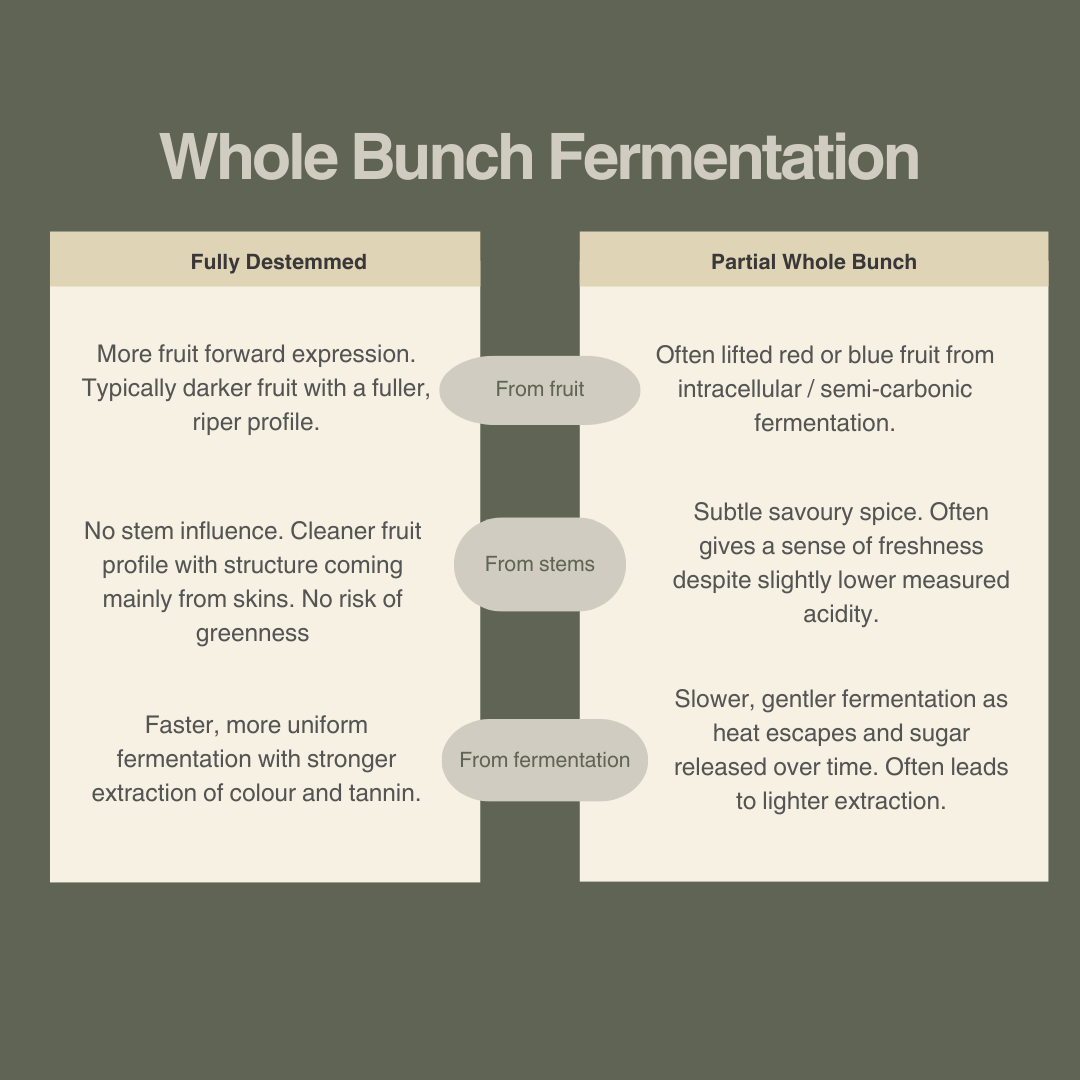
A somewhat simplified summary of what can happen to a wine with or without whole bunch
The first influence happens inside the berries themselves. Because many of the grapes remain uncrushed at the beginning of fermentation, without oxygen being available as the berries are submerged in liquid, a process called intracellular fermentation begins. This is what happens during carbonic maceration, only carbon dioxide is added to the tank to remove all oxygen. Enzymatic activity inside the intact berries begins to convert sugars into alcohol even before the yeasts fully take over.
This process tends to produce wines with a different aromatic profile. The fruit can become prettier, more lifted and sometimes slightly blue-fruited, with a lighter, more perfumed character. It’s one of the reasons whole bunch fermentation often makes wines feel a little more delicate, even when the grape itself is quite powerful.
The second effect comes from the stems themselves.
Stems contain a fair amount of potassium, which interacts with the tartaric acid in the must. The potassium forms potassium bitartrate crystals, which can precipitate out of the wine. In simple terms, that means the measurable acidity of the wine actually drops slightly.
Paradoxically, many people experience the opposite in the glass. Wines made with whole clusters often feel fresher and more lifted, even though the laboratory numbers might show slightly lower acidity. The stems also contribute small amounts of tannin and aromatic compounds, which can add structure and subtle savoury notes.
The third effect is more mechanical, but still indirectly affects flavour, and it relates to how fermentation behaves.
When stems are present they create channels within the fermenting mass. Instead of a dense cap of skins sitting tightly on top of the juice, the stems allow heat and carbon dioxide to move more freely through the tank. This can moderate the pace of fermentation. Additionally, avoiding the extra crush means that sugar is released more slowly into the ferment as the whole berries burst throughout the ferment. In many cases the fermentation runs slightly longer and more gently.
There are also practical benefits. The structural lattice created by the stems makes the cap easier to manage and often allows pressing to be gentler, because the berries haven’t all been pulverised into a dense mass.
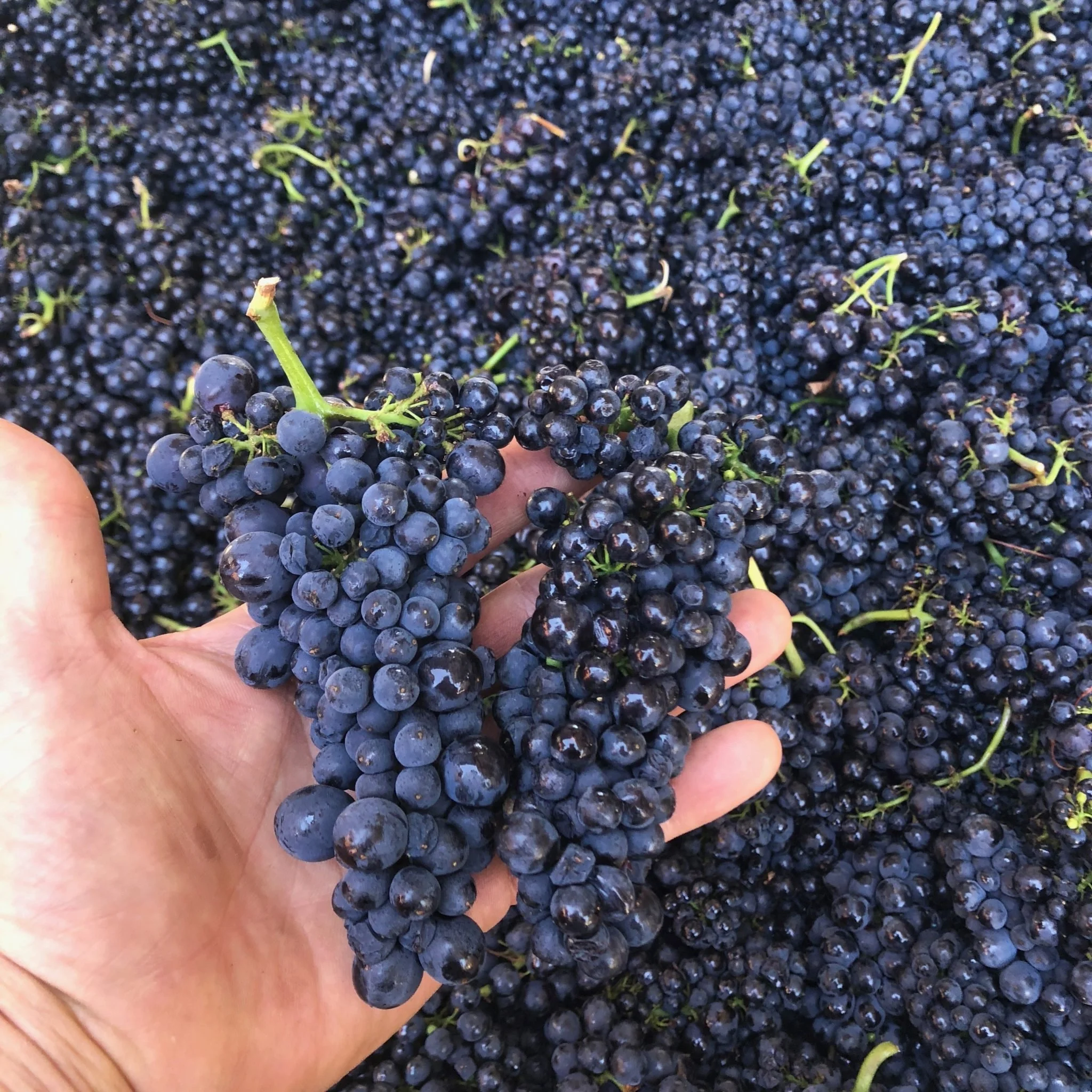
The Stem Test
There’s a slightly odd method among winemakers when deciding whether to use whole clusters: eating the stems.
People often say that tasting the stems themselves is the only real way to judge whether they’re ripe enough to go into the tank. If they taste bitter, green or harsh, the resulting wine may show those same characters. If they taste woody and slightly sweet, they’re more likely to contribute something positive.
I’ve been made to this before on instruction form the members, I doubt this affects anyone’s decision making but they still insist on watching me eat stems. It’s never tasty.
Over to you!
So that’s the background. Whether we decide to use whole bunch fermentation this year or not will ultimately come down to a vote, but hopefully this gives a clearer idea of what’s actually happening inside the tank when those stems go in.
Join Not Yet Named Wine Co. and become part of a wine club where you make the decisions.
You’ll follow each vintage and vote on every winemaking decision as well as the democratically designing a piece of art for the label.
6 BOTTLES NOW!
Receive your first six-bottle case as soon as you join. After that, you can use your credit to order wine whenever you want!
MIX YOUR CASE
Choose from the wines we have made before and build a case to suit you.
EXTRA SUBSCRIBER BENEFITS
Influence the additional wines we make for shops, bars and restaurants
See wines you helped create out in the wild
10% off additional wines, events and merchandise
Invitations to tastings, pick-up parties and school trips
Follow every vintage and track your votes through the app