Grape Variety Top Trumps
Presenting your grape choice slightly differently this time. There are so many to choose from that it would be easy to get lost in the technical details. Some of that will still appear, but analysing the relative levels of tannin and acidity across medium, medium+, high and so on, whilst important, can become a little tedious. All of these grapes are international varieties and relatively well understood, so anyone voting can easily turn to the traditional literature for a full technical breakdown. Instead, I wanted to present the more subjective side of the grapes...
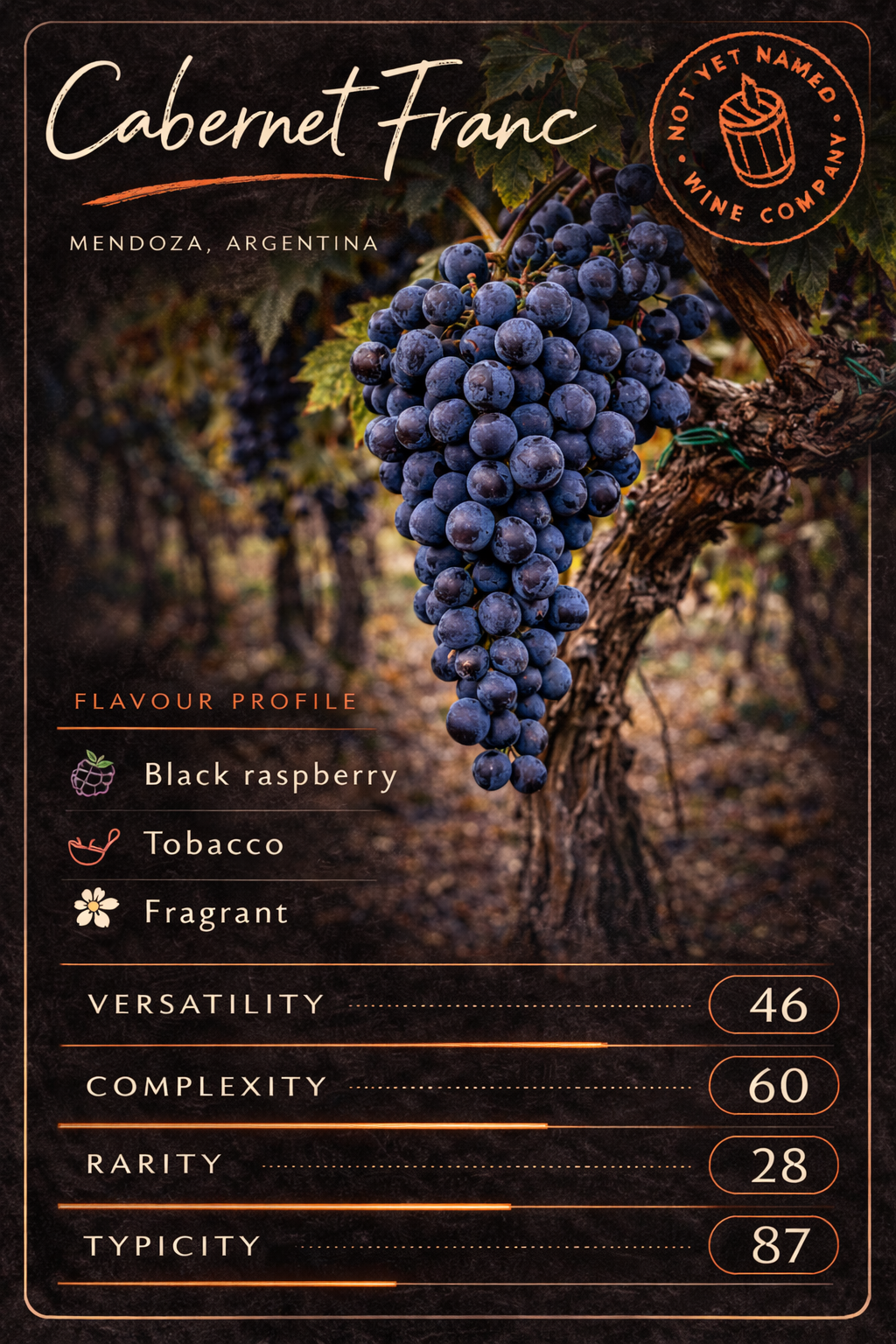
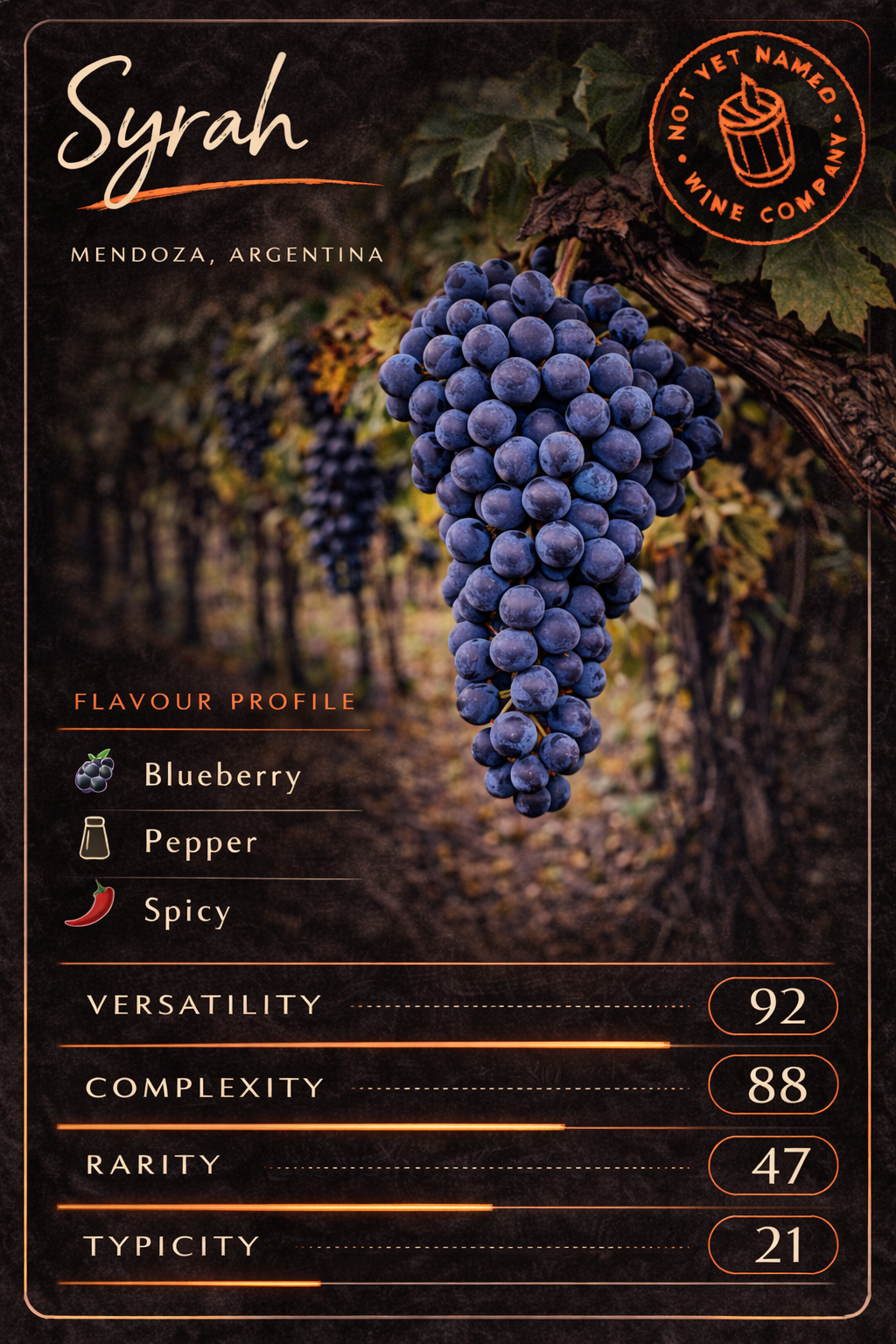
The Categories
Versatility reflects the experience you get with Not Yet Named. Some grapes lend themselves to many different winemaking choices. The more versatile the grape, the more opportunities there are for votes and for subscribers to shape the wine in their own image.
Complexity considers how interesting the finished wine can become, different techniques will coax that out of the grape but some varieties naturally build depth through their intrinsic characteristics.
Rarity acknowledges the reality that not all opportunities come around often. A grape might be common globally but unusual for us to work with, which makes the chance to make it a little more special. And for the reverse, some otherwise rare grapes are already in the NYN armoury.
Finally, typicity looks at how strongly a grape represents a classic style AND regional identity. Some varieties instantly evoke a particular place or tradition, and that sense of authenticity can be part of the appeal when choosing what to make. All my scores for typicity are directly linked to Mendoza.
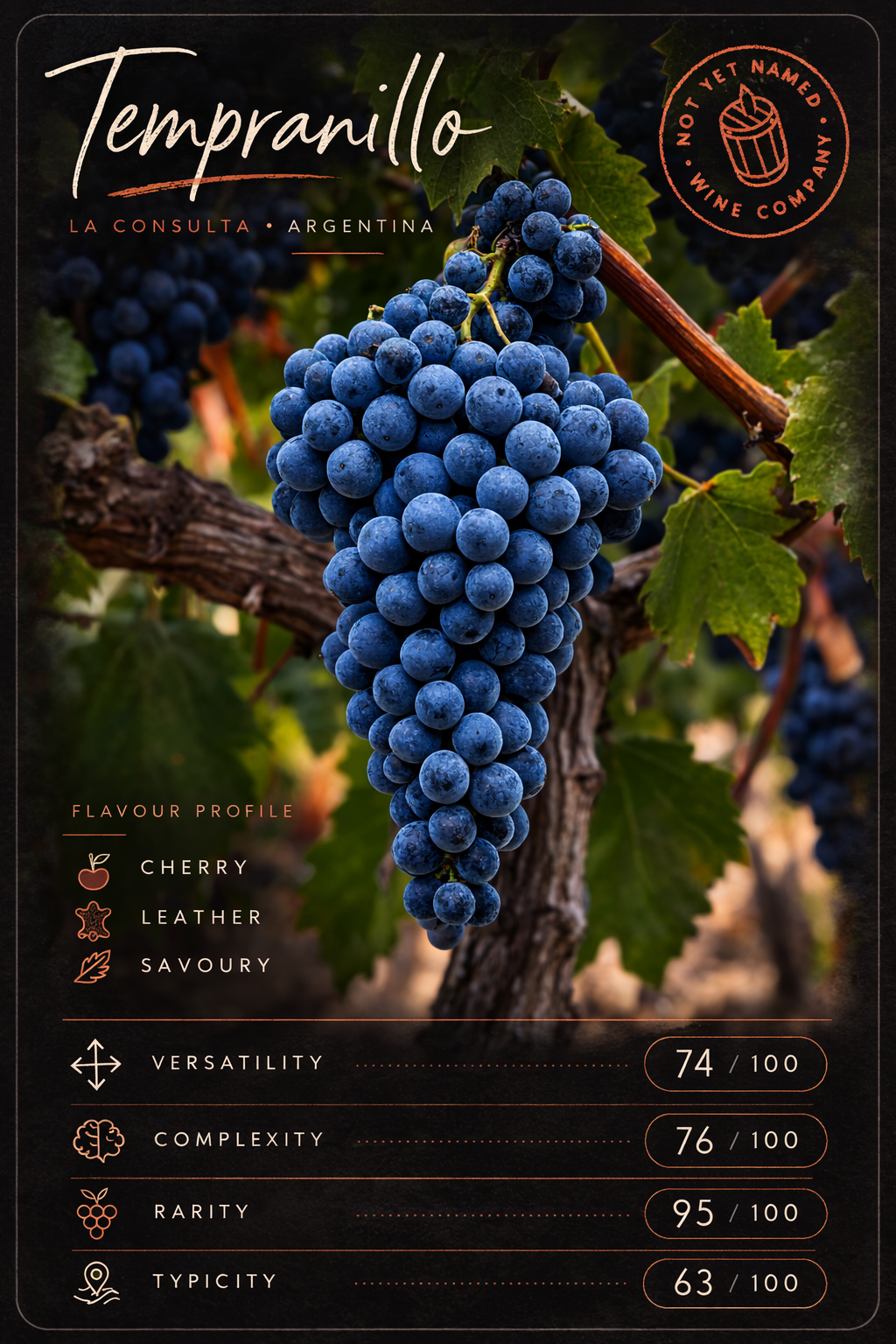
Tempranillo
Tempranillo is Spain’s historic flagship grape, forming the basis of Rioja and Ribera del Duero, where it is prized for producing structured wines that age forever in, often American, oak. It was also one of the first varieties planted in La Consulta, making it something of a heritage grape of the region alongside Semillon and Malbec. An early ripener by nature, Tempranillo suits sunny climates well, developing classic flavours of cherry, savoury depth and subtle leathery complexity as it matures. Other than Spain it is rarely seen elsewhere, although as a little insider hint… I’m currently looking at Spain for Vintage #9 albeit very much Garnacha territory, so this scores well for rarity in that context.
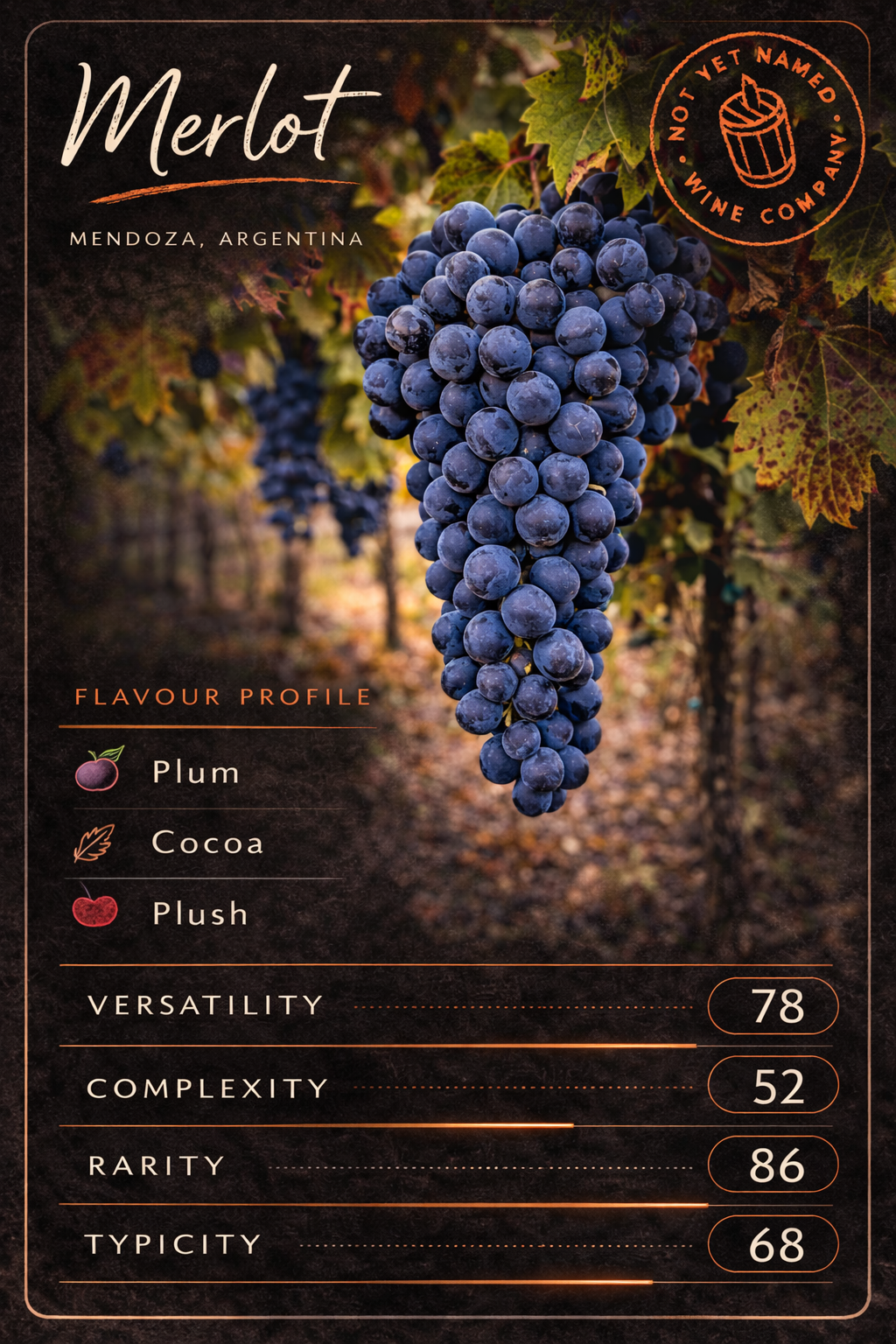
Merlot
F***ing Merlot. Somehow both one of the most planted grapes in the world and still much maligned. Born in Bordeaux, where it forms the plush heart of the Right Bank wines of Pomerol and Saint-Émilion, it spread across the globe because growers quickly realised how reliably it ripens and how tasty it is. In the glass it leans toward plum, with soft cocoa-like richness and a plush texture that makes it the hedonist’s choice of this lineup. It also plays an important role in Argentina, where it quietly thrives, compared to Malbec, in the Uco Valley, often bringing generosity and roundness.
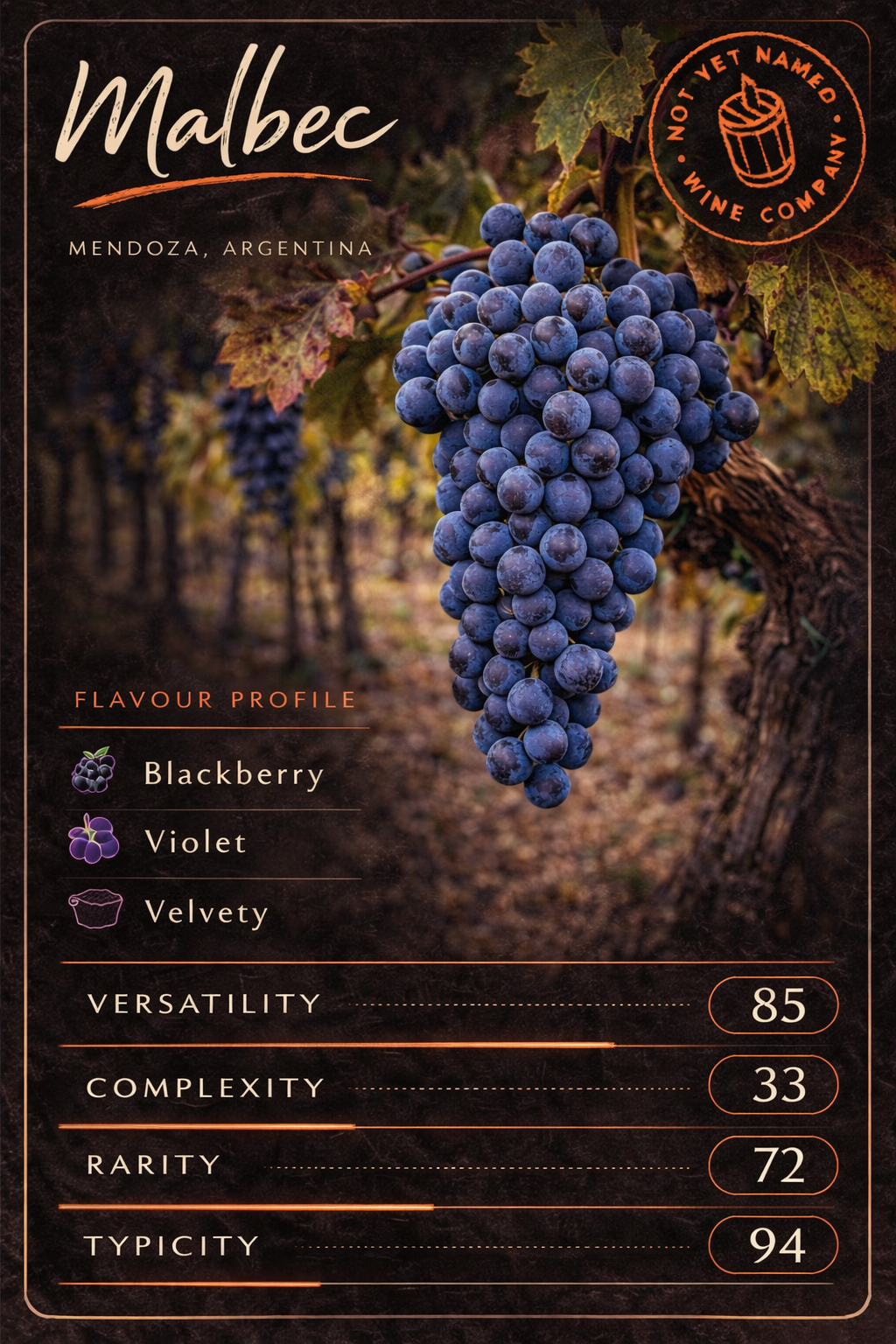
Malbec
How could we come here and not offer Malbec. The grape has some French fame in Cahors and Bordeaux, but Argentina is where it took off, becoming the country’s defining variety thanks to the high-altitude vineyards of Mendoza. I’ve scored it surprisingly highly for rarity on the card; that’s not because Malbec is rare in Argentina, but because I suspect opportunities for us to make one in the future will be few. It also ranks well for versatility, which isn’t necessarily intrinsic to the grape itself, but here in Mendoza winemakers have become masters at shaping it into different styles.
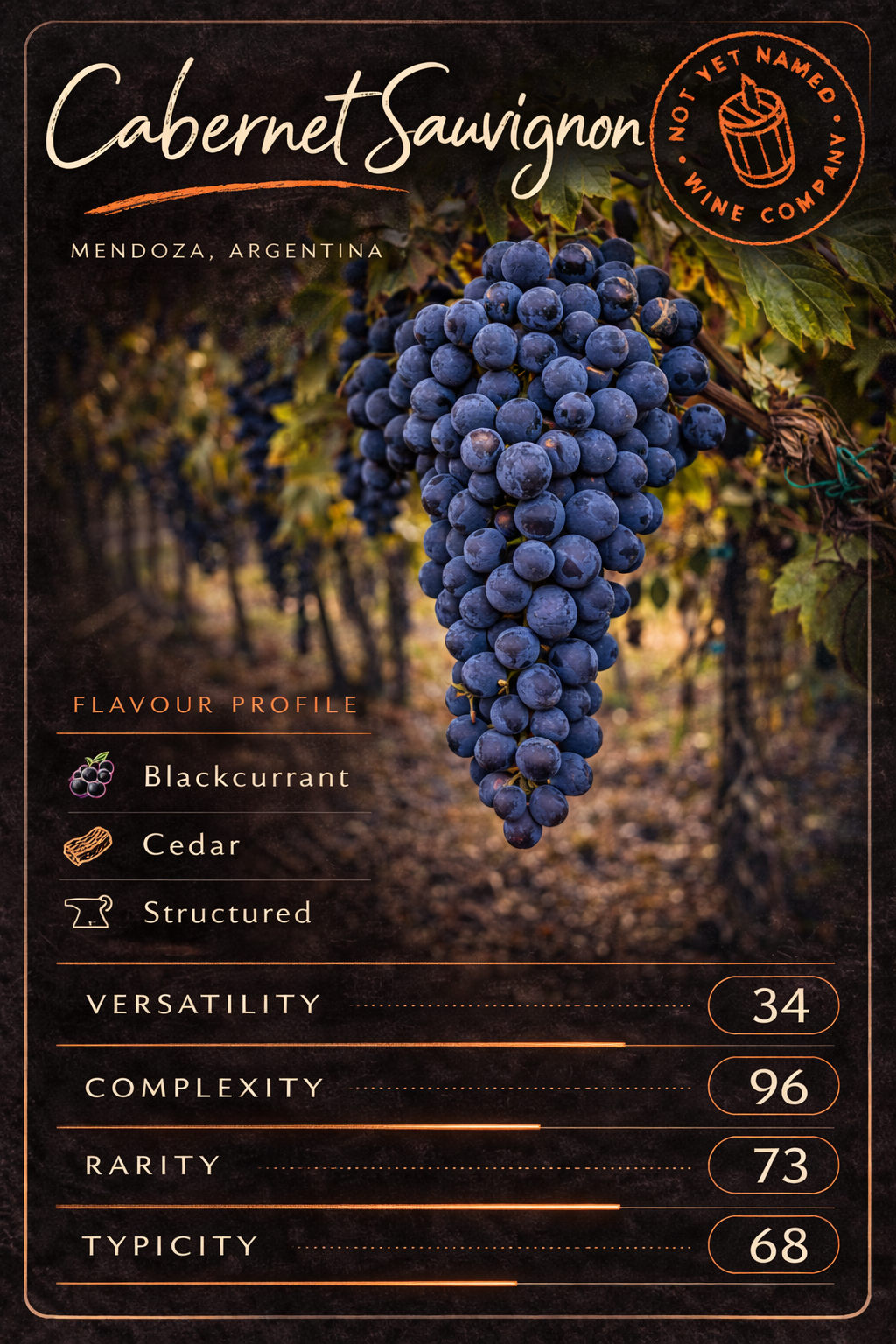
cabernet Sauvignon
The classic, and one we’ve not yet made. Perhaps because it’s the opposite of rare, it’s planted almost everywhere and produces some of the world’s most famous wines, from Bordeaux to Napa. It’s generally well loved but perhaps not so fashionable right now, often overshadowed by lighter bodied varieties. In the glass it delivers consistently; blackcurrant fruit, firm structure and the cedar depth that comes with ageing. It gets a cruel ranking on versatility as it’s unmistakable however it’s made. So the question is whether Cabernet Sauvignon finally gets its moment… or whether it will remain Not Yet Named’s perennial bridesmaid.
cabernet Franc
Perhaps this could score higher for rarity, but as we already have one on the way (Dayton’s Livermore version has printed labels and bottling pencilled in for early April - although dates like that have been rubbed out before). A parent of Cabernet Sauvignon, but prized for its perfume and herbaceous quality. But above all it has reliability in the vineyard, never failing to ripen, even in the cooler years…. In the glass it leans toward black raspberry, with gentle tobacco notes and a fragrant lift that brings elegance and freshness to the lineup.
Syrah
It treated us very nicely in Colchagua, where it formed part of a blend that really knocked our socks off. Originally from the northern Rhône Valley, Syrah is famous for producing deeply flavoured wines with distinctive spice and savoury depth. In the glass it leans toward blueberry fruit, with peppery spice and a bold, structured profile. It’s also far less common in Argentina than Malbec, which makes it an intriguing option here in Mendoza, as these typicity scores are linked to the place in which they’re grown, my personal experience (or memory of that experience) means I don’t think I’ve had for long time…
I imagine there will be some backlash here, and I very much welcome it!
Join Not Yet Named Wine Co. and become part of a wine club where you make the decisions.
You’ll follow each vintage and vote on every winemaking decision as well as the democratically designing a piece of art for the label.
6 BOTTLES NOW!
Receive your first six-bottle case as soon as you join. After that, you can use your credit to order wine whenever you want!
MIX YOUR CASE
Choose from the wines we have made before and build a case to suit you.
EXTRA SUBSCRIBER BENEFITS
Influence the additional wines we make for shops, bars and restaurants
See wines you helped create out in the wild
10% off additional wines, events and merchandise
Invitations to tastings, pick-up parties and school trips
Follow every vintage and track your votes through the app