White Grape Co-ferments
Another topic I really enjoy, mostly because of the slightly counterintuitive way it affects the colour of wine, and partly because I’ve tended to really enjoy reds that include a small amount of white grapes in the ferment. It sounds odd at first, but it can produce some very tasty wine and is becoming increasingly popular with the changing trend towards lighter wines too.
What is it?
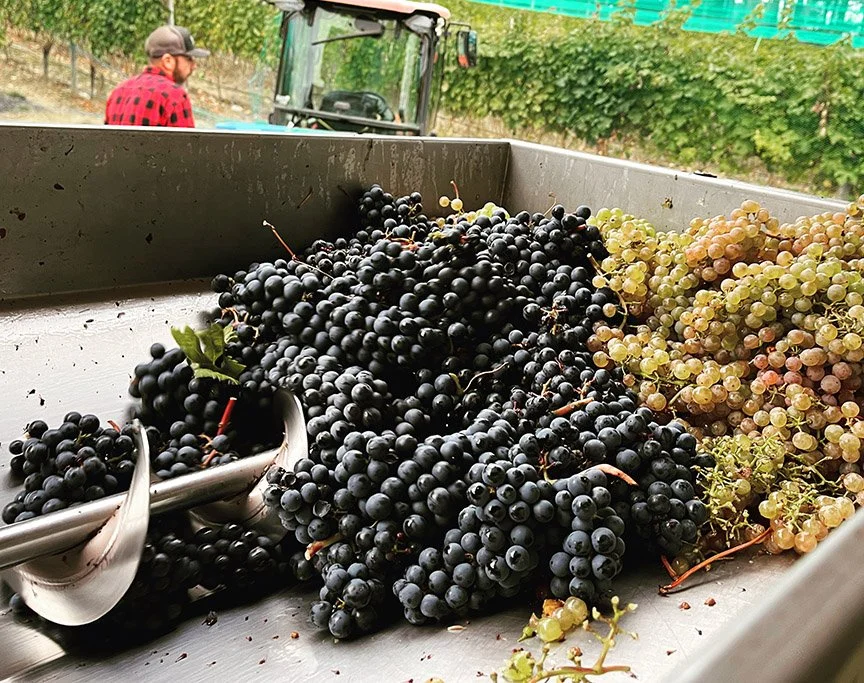
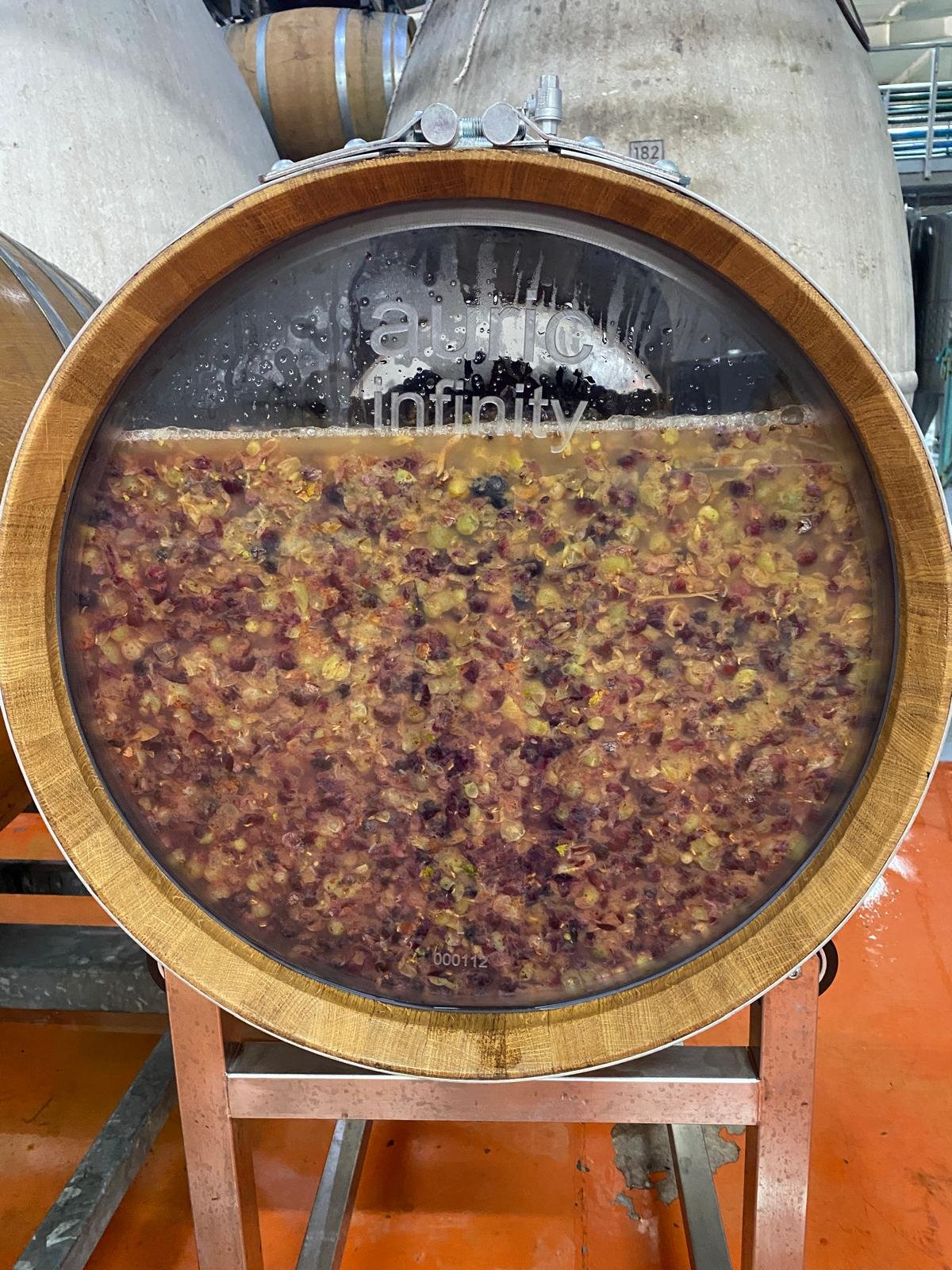
Co-fermentation is when two (or more) grape varieties ferment together in the same vessel, at the same time. It’s quite different from blending finished wines, and the chemistry behaves differently, particularly when white grapes are involved.
Blending, on the other hand, means fermenting each variety separately and combining the wines later, often close to bottling or sometimes after malolactic fermentation. The obvious advantage is predictability, by that stage you more or less know what each wine tastes like and can match perfectly. The benefit of deciding the blend earlier can create a more integrated wine, but it also comes with that risk that blending doesn’t present.
Co-Ferments around the world
The canonical reference point is Côte-Rôtie in France, where Syrah is co-fermented with a small proportion of Viognier (up to 20%). Despite including a white grape, the wines aren’t particularly light. Instead the effect shows up in colour stability, aromatics and mouthfeel, driven by the phenolic chemistry happening during fermentation - big words like copigmentation, polymer formation, and tannin–anthocyanin interactions that I’m going to pretend to understand.
We’ve played with this before, of course, in our Rhône-inspired S.O.C.K.S: red varieties as the base, with a small white component as the seasoning. For us this was a tiny amount of Viognier to join in the Syrah, Grenache and Cinsault party.
I think it worked, we could make a comparison with the La Despensa Field Blend, (although the white co-ferment would not be a completely isolated difference as we also did a bit of whole bunch too, but the overall blend was otherwise very similar. S.O.C.K.S was more approachable in its first years than I would have expected, albeit hard to say if that <5% was a significant part of its drinkability.
Elsewhere
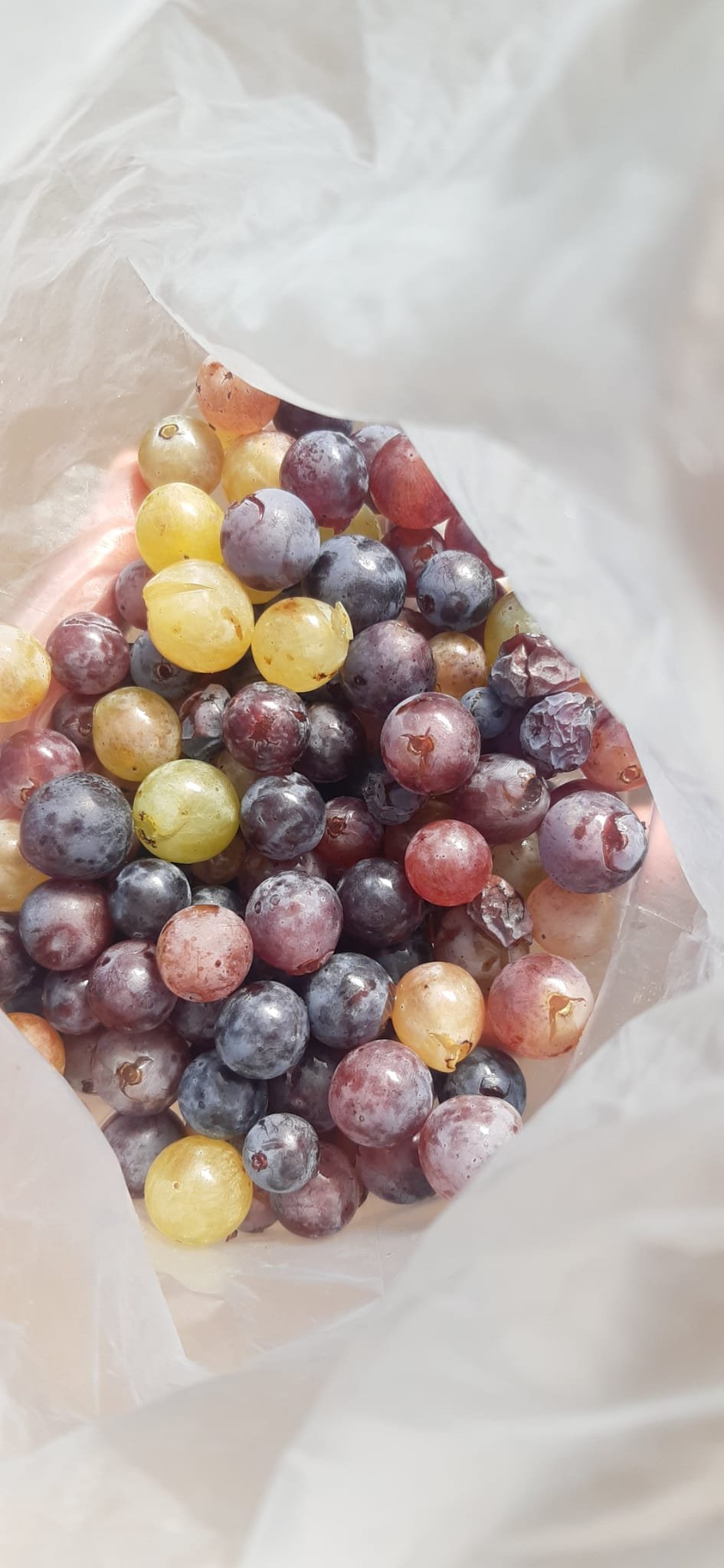
Quite a few producers here have borrowed the northern Rhône recipe, co-fermenting Syrah with a splash of Viognier. Examples include El Enemigo Syrah–Viognier, Trapiche Iscay Syrah–Viognier and Las Perdices Syrah–Viognier, so it’s definitely not unheard of.
Malbec with Semillon, though, is the less tested Argentine twist. Alejandro Vigil points out that historically in Mendoza Malbec was planted alongside Semillon and other Bordeaux varieties, so co-fermentations happened all the time simply because everything grew in the same vineyard. In other words, it wasn’t a clever winemaking decision, more of a clever planting decision so it then just happened naturally when the grapes were picked together. He later leaned into the idea deliberately, including co-fermenting Malbec with Semillon for El Enemigo’s top wine, As Bravas.
Karim also does it himself too. The Altocedro Gran Reserva is about 96% Malbec and 4% Semillon, co-fermented in French oak barrels, with the Semillon there mainly to lift the aromatics. Only reseved for the Gran Reserva.
There are other interesting examples around too. Catena Zapata’sMalbec Argentino, from the Adrianna vineyard is co-fermented with Viognier, while the Nicasia component is co-fermented with Cabernet Franc. The aforementioned As Bravas uses whole-cluster Malbec co-fermented with about 5% Semillon, which apparently gives the wine a slightly herbal–floral aromatic profile with very fine tannins.
It’s still fairly niche compared with straight varietal wines, but it definitely exists especially among producers who like to experiment or push towards fresher styles without having to reach for the bag of tartaric as much.
The Techni-colour DEtails
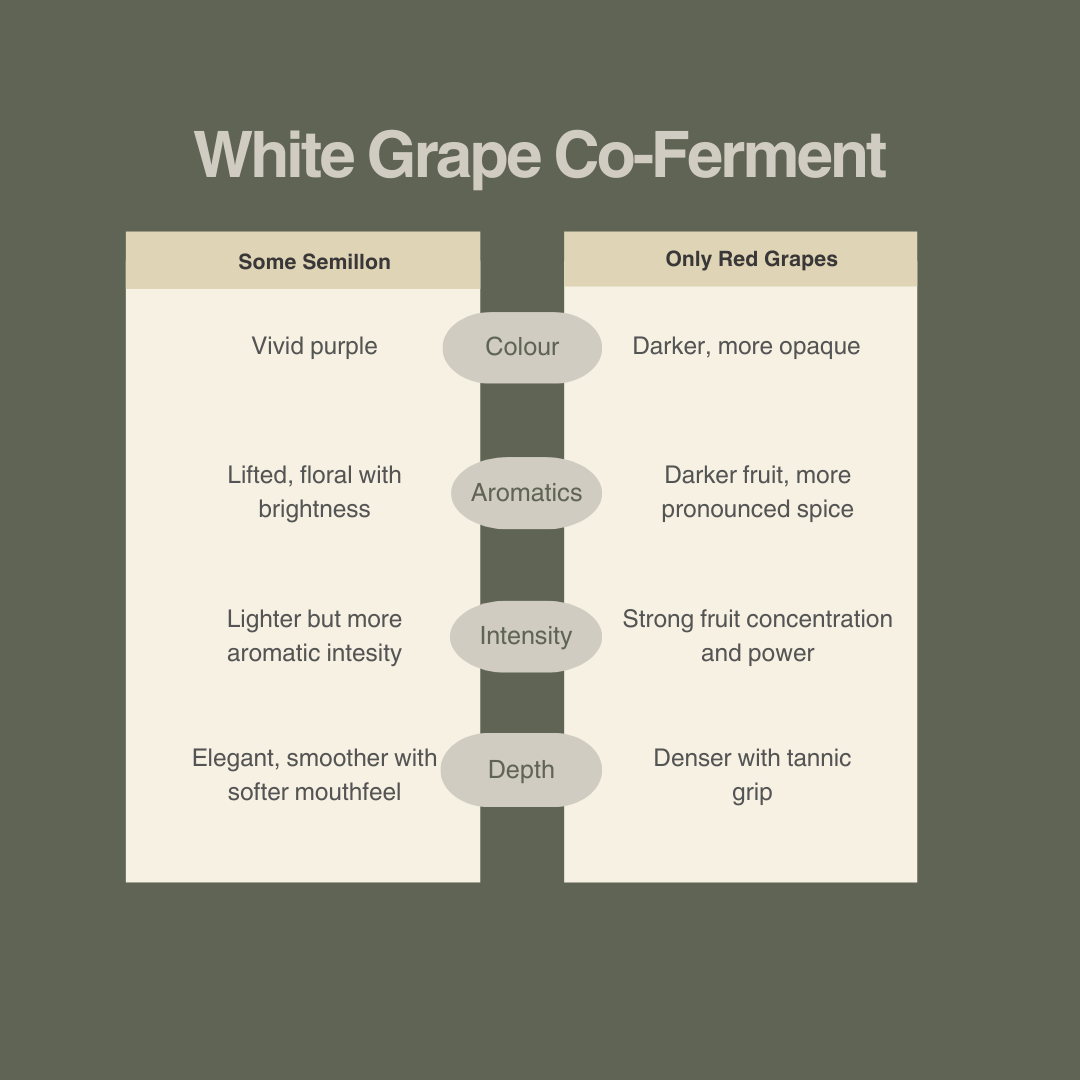
Here comes the geeky bit. Copigmentation explains the colour stability, which is basically the “stacking” interaction between anthocyanins (the red pigments from grape skins that provide colour) and other phenolic compounds. When these molecules line up together they can intensify colour and even shift the hue slightly. Roger Boulton, the king of oenology textbooks suggests copigmentation can account for something like 30–50% of a young red wine’s colour.
Jamie Goode often explains the practical version of this: if you add a small amount of white grapes to a red ferment the colourless phenolics from the white skins can bind with those anthocyanins and form shorter chain and more stable pigment complexes. The slightly paradoxical result is that adding a white grape can sometimes make the wine look darker, even though you’re technically diluting the colour.
But it doesn’t always work out that neatly. A New Zealand study looking at Syrah–Viognier co-ferments found that wines made from Syrah alone weren’t consistently different in colour from the co-fermented versions. In that case, the phenolics from the Viognier simply didn’t provide enough to boost colour.
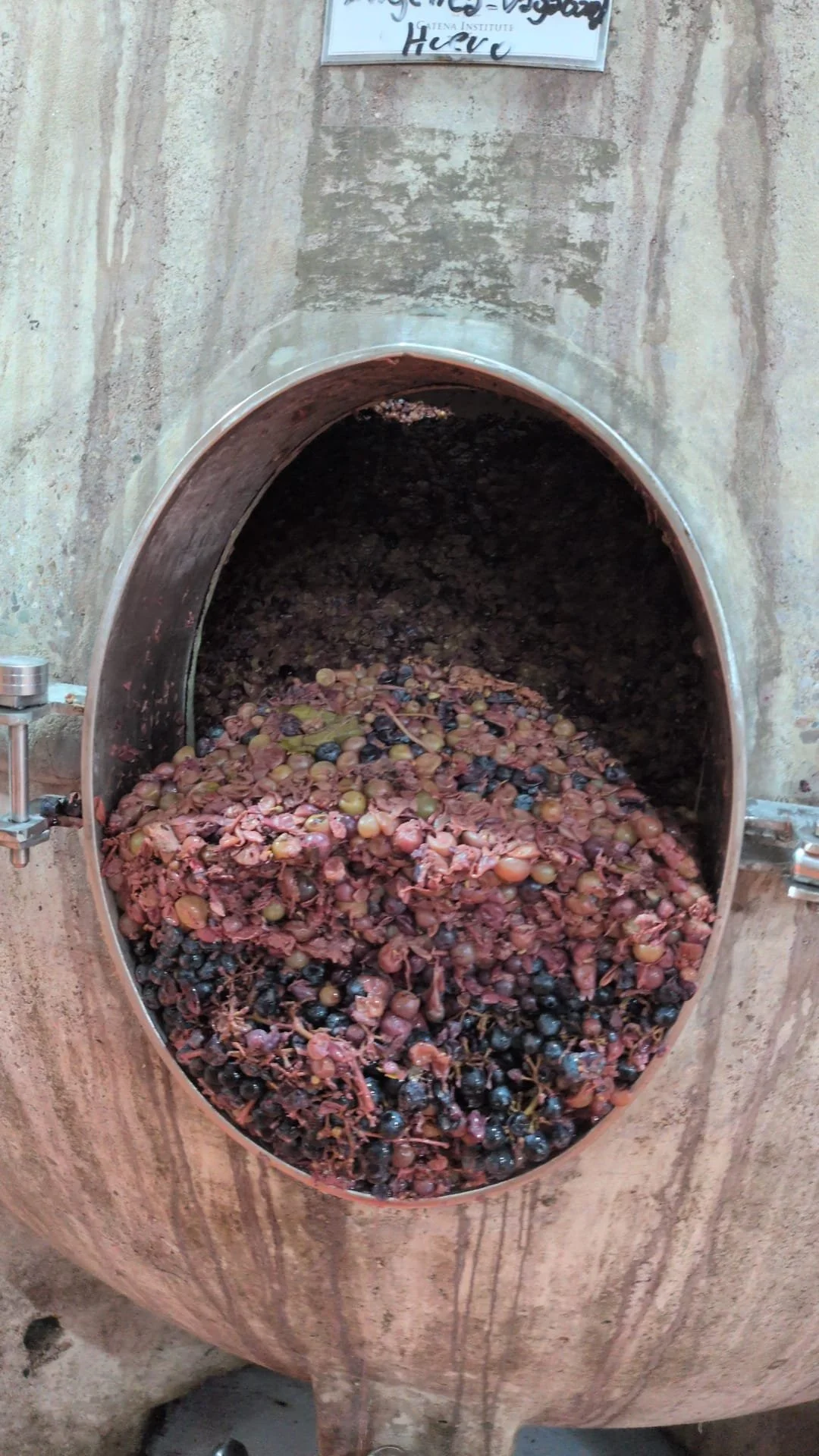
So it’s not guaranteed. It depends on all sorts of things: the phenolic makeup of the grapes, whether you add juice, skins or whole berries, the proportion used, how the ferment is handled, and even factors not least including the pH in the base wine. In other words, the chemistry is true, but the outcome isn’t always predictable due to the various variables.
Risks
I’m slightly wary that this all sounds like an overly positive view of white-grape co-fermentation. You don’t see many examples written up where it clearly went wrong. Then again, it’s not a particularly common technique to begin with, and I suspect people are less inclined to shout about their failures.
When it hasn’t worked, it’s usually because logistics forced the decision rather than the wine.
Mismatched ripeness windows.
You either pick one variety at the wrong time, or you start storing grapes, juice, or pressed solids while waiting for the other. That adds a logistical headache.
Pyrazines and “green” characters.
If you’re co-fermenting partly because one component is under-ripe, you can end up locking in vegetal methoxypyrazines, the bell pepper or leafy aromas some grapes naturally produce.
Oxidation, particularly with sensitive whites.
Some white varieties brown quickly. If the white portion is being chilled and stored but handled poorly you can drag oxidative notes into the red.
Join Not Yet Named Wine Co. and become part of a wine club where you make the decisions.
You’ll follow each vintage and vote on every winemaking decision as well as the democratically designing a piece of art for the label.
6 BOTTLES NOW!
Receive your first six-bottle case as soon as you join. After that, you can use your credit to order wine whenever you want!
MIX YOUR CASE
Choose from the wines we have made before and build a case to suit you.
EXTRA SUBSCRIBER BENEFITS
Influence the additional wines we make for shops, bars and restaurants
See wines you helped create out in the wild
10% off additional wines, events and merchandise
Invitations to tastings, pick-up parties and school trips
Follow every vintage and track your votes through the app