Vintage #10 with El Reventón
I had not planned to make Summer 2026 into a double-header. One harvest every six months was the plan, come home looking windswept and vaguely competent, but thoroughly exhausted. Instead, somewhere between having too much fun Kostaki gang and then meeting the equally enigmatic trio behind El Reventón, I decided to double up.
The Accidental Double Header
The original plan was simple enough, go to Greece do a harvest with Kostaki, just for fun, in August whilst I prepared for the following vintage in September. Somewhere we could make both a red and a white. I was worried that making only a white, built solely around Muscat, would somehow feel limiting. In hindsight, that fear would have been thoroughly buried by tasting the range in full, as I did last week.
However, while I was in Argentina working on a Vagabond wine with Catena, I met Gearóid Lane, who was showing off a couple of his wines that tickled my fancy. Given I had already fallen, by happy accident, into the Catena orbit in the first place through meeting Adrianna in Tufnell Park one evening, this quickly went from an interesting wine to “I’d like one of those”. El Reventón only makes red wines, which I would normally consider limiting for a single NYN vintage, where I’m trying to make sure the members have plenty of variety. I tentatively probed a few more things and when I discovered that their harvest begins in September, shockingly leaving me with a two-week break in between harvests, I floated the idea.
The thing that made it go from charming idea to unavoidable plan is that Not Yet Named is already built for this kind of lunacy. My strategy is probably a lot simpler than you may think, if a fun opportunity with fun people presents itself, I say yes.
So suddenly 2026 had two halves: one white and one red, one Greek and one Spanish, one Muscat and one Garnacha. Better still, the harvest windows sit far enough apart that doing both is not entirely an act of total self-destruction. In fact, there is even the obscene luxury of a gap in the middle. I’m trying to behave like this was a hard decision. It wasn’t.
The Remembered REgion of Spain
For the last decade, Sierra de Gredos was one of those regions that wine trade people loved talking about just before everyone else caught on. Today, it is much harder to call it a secret. Official and trade sources now describe Cebreros and the wider Gredos mountains in terms that would have sounded wildly ambitious a couple of decades ago: old-vine Garnacha, high-altitude vineyards, granite and schist, mountain climate, and a fine-wine identity rooted in place and modern winemaking rather than in oak or power.
What I think appealed to many is that this place was not invented-from-scratch. Viticulture around Cebreros is really old. There’s written evidence of vines in the area from 1272, references in the early sixteenth century, and a long history of wines sold into Madrid before phylloxera. Sadly, ageing populations and a great rural exodus helped push much of the region into neglect. Even now, the official picture is one of remarkable fragmentation: hundreds upon hundreds of tiny plots, averaging under half a hectare, spread across mountain slopes and valleys.
And then came the revolution. Decanter’s recent profile of Comando G says it outright: the project led by Daniel Landi and Fernando García inspired a new generation of Spanish winemakers, put the mountains of Gredos on the fine-wine map and showed the coolest side of Garnacha. The social backdrop of growers being paid next to nothing, fruit going only to co-operatives, nobody actually bottling the wine, really tarnished the local Garnacha. Comando G’s greatest achievement was not only making great wine, but helping a region rediscover itself.
Cebreros’ own official material describes vineyards from roughly 600 to 1,200 metres above sea level, mostly on granite with some schist, with Garnacha accounting for the overwhelming majority of plantings. Vines are often very old, the plots are tiny, and altitude plus mountain influence create conditions that are radically different from the broad stereotype of warm, blowzy Spanish Garnacha. That is why Garnacha behaves so differently here, it is one of the purest and most interesting expressions of the grape, with cooler sites slowing ripening, keeping sugars in check and preserving bright acidity.
the team
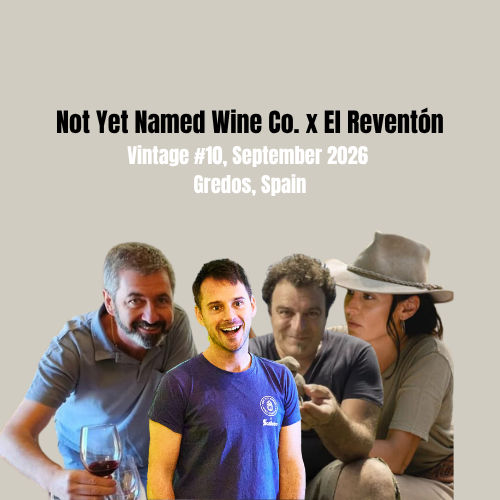
One of the reasons El Reventón felt impossible to ignore is that the people behind it are absurdly overqualified.
Alejandro Vigil first visited Gredos around fifteen years ago and became fascinated by the wines. Years later, on a return trip for the Fiesta de la Floración, he met the people of Comando G, told Adrianna Catena that they should do something together in Spain, and eventually the idea became real when Gearóid Lane joined the conversation six years later. A week after his arrival, Dani Landi offered them the El Reventón vineyard. Wine often seems to wait until the timing is silly enough to be perfect.
Of the three; Adrianna brings family history and intellectual heft in very unfair proportions. She was raised in a family with over a century of Argentine winemaking history, before graduating from UC Berkeley with highest honours and holds both a Master’s and a PhD from Oxford, specialising as a historian in the Early Modern Iberian Atlantic. She is not wine-adjacent in a decorative way; she is both deeply of the wine world and intellectually independent of it, which is a very useful combination if you want someone who can understand heritage without turning it into museum dust.
Alejandro trained in agricultural engineering, took master’s degrees in both winemaking and irrigation management, and was running soil analysis work at a young age before joining Catena in research and development until ultimately becoming winemaking director. He has been Catena’s chief winemaker since 2002 and received the first 100-point score ever awarded to a South American wine by The Wine Advocate. On top of that, Casa Vigil in Mendoza, one of his many restaurants, holds both a MICHELIN star and a Green Star.
Then there is Gearóid Lane, himself a recent member of Not Yet Named, he is a wine lover who has reinvented himself as a winemaker. He spent nearly three decades in the energy industry before pivoting, whilst still bringing his sustainability expertise into the bodega. Thanks to him the winery is fully off-grid and run on renewable energy: 24 solar panels, battery storage, and enough rooftop power to cover the bodega’s needs throughout the year, including harvest, with the exception of the pressure washer. That probably deserves its own blog, I’ll get him to write it.
Crucially, and never to be understated, they are also great fun.
An Icon Project
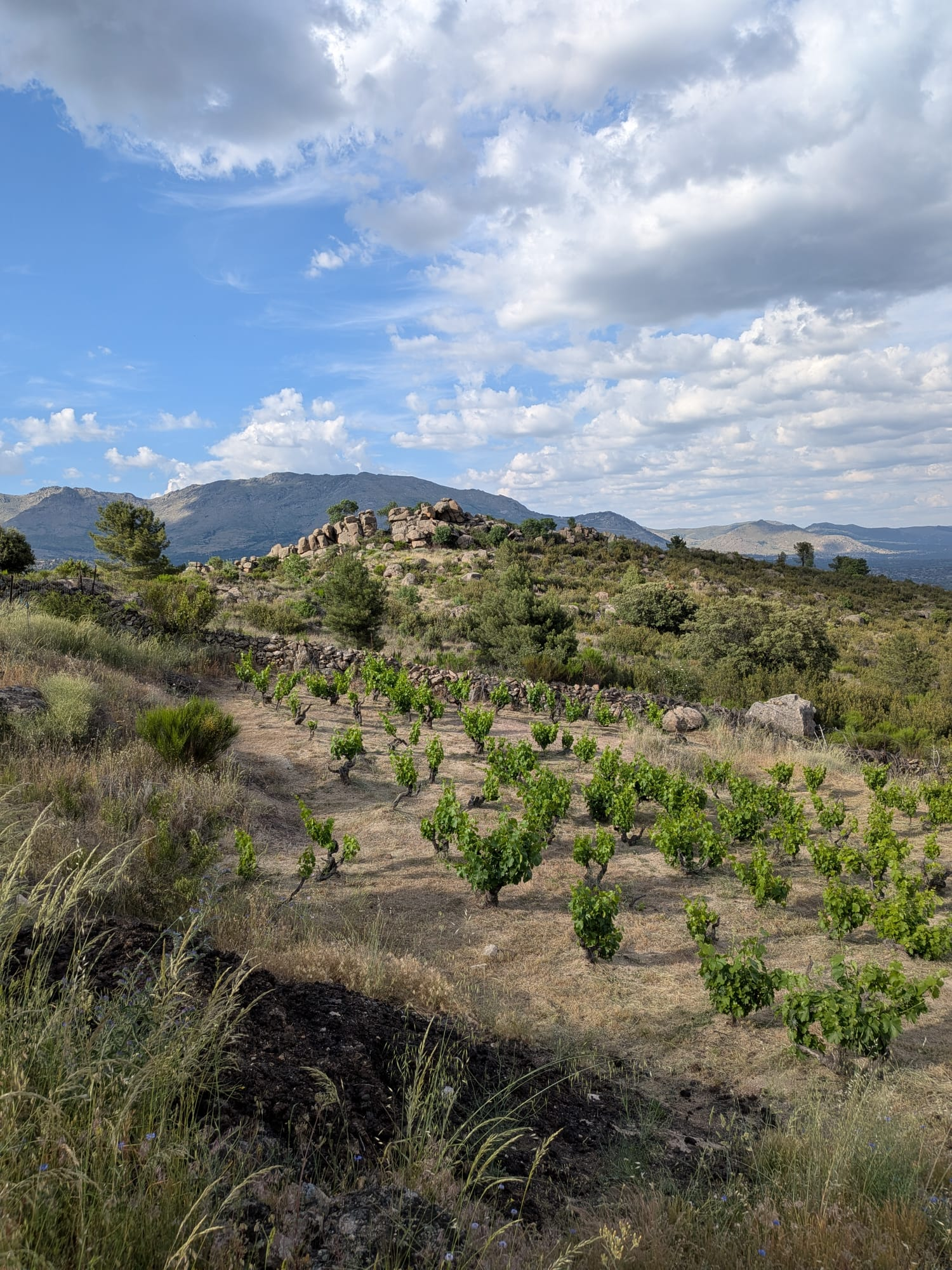
A couple of weeks ago I went to see the place properly, including a vineyard called Los Estoicos, and this is where things became dangerous.
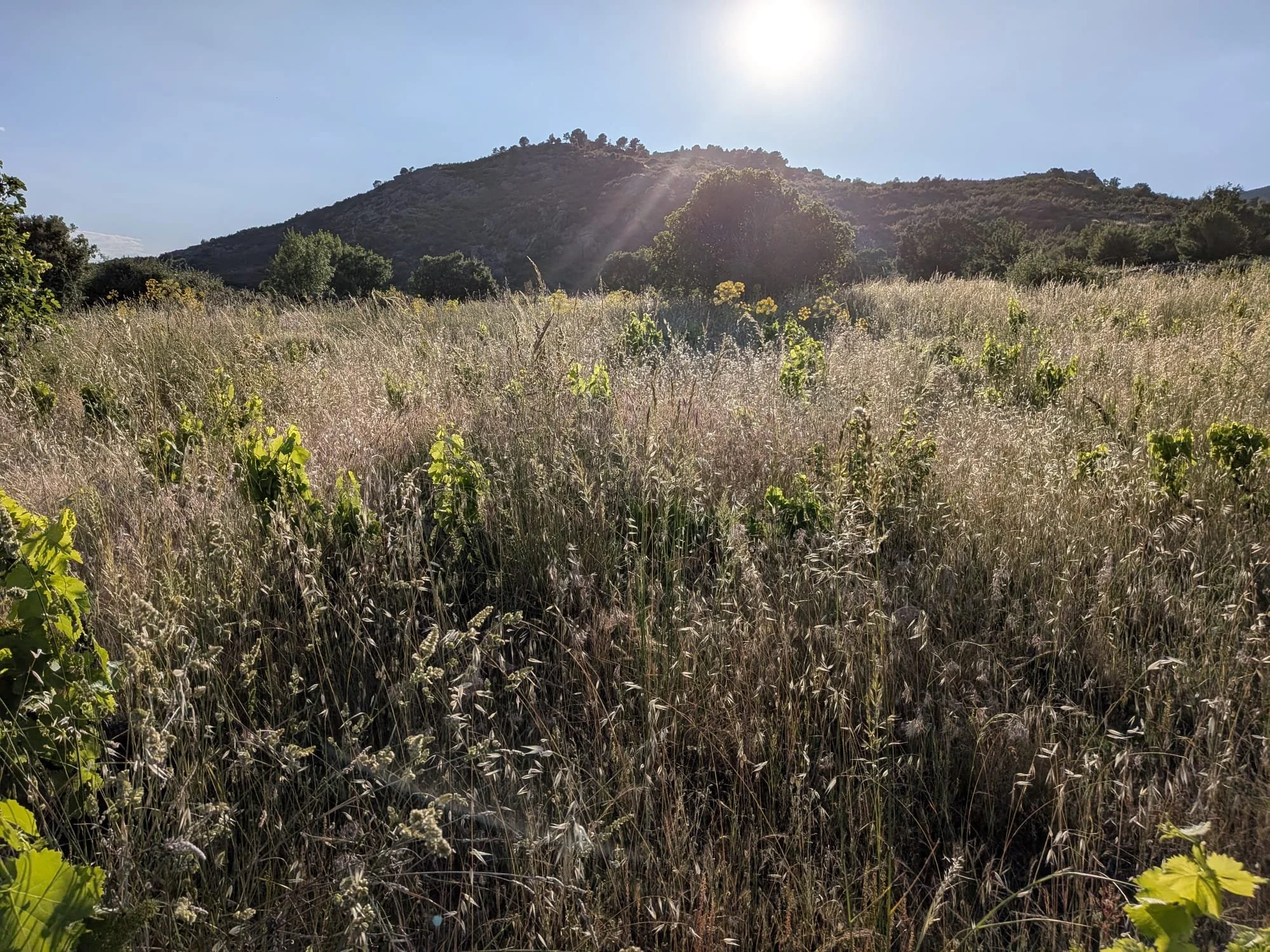
It was named by Alejandro after the enormous granite boulders that sit amongst the vines and resemble stoic statues. It's a hidden little parcel that requires a walk through woodland and scrub to reach. Along the way there was an incredible amount of biodiversity; birds, insects, roaming animals and old vines tucked away amongst the landscape. Pretty rare in today's monoculture vineyards.
The vines themselves date back to around 1930 and, of course, are planted to Garnacha. The style will be very much in keeping with the region's reputation: elegant, perfumed and surprisingly light on its feet rather than powerful and heavy. It has the potential to make an incredible wine but the vineyard is basically too small for El Reventón to bottle separately. Instead, the wine is normally used to top up their other premium wines. For most wineries, producing a standalone wine from such a tiny parcel doesn't make commercial sense but for us, however, it's ideal. We only need around 500 litres, which means we have an opportunity to preserve something special that otherwise wouldn't exist as its own wine.
If we do it, this will sit beside our democratic wine, whilst we’re small it presents us with unique opportunities to make wines that otherwise might not see the light of day. It would be an incredible bonus if we are able to add Los Estoicos, alongside our 2025 Castiglione Falletto Barolo to our burgeoning portfolio of icons.
School Trip!
Official tourism bodies describe the Sierra de Gredos Regional Park as a landscape of glacial lagoons, cirques, gorges and cliffs, with ibex, vultures and eagles, plus serious hiking and stargazing credentials. We’re also just a couple of hours west of Madrid, introducing easy access and the opportunity to extend your trips.
Historic towns, traditional architecture, starry nights, figs, stews, wood-fired roasts, beans from El Barco, meat from Ávila and the general pleasure of eating the Spanish way. This is helpful, because a school trip without a strong lunch strategy is just educational suffering.
So that is why we’re doing two vintages. The Yin of Kostaki turned out to be too good to do half-heartedly the Yan of El Reventón was too exciting to ignore. Garnacha in the mountains is one of the most compelling stories in wine right now and El Reventón is being stewarded by people with the talent, joy and pedigree to make something seriously good happen. And because, every now and then, we stop pretending to be sensible.
Join Not Yet Named Wine Co. and become part of a wine club where you make the decisions.
You’ll follow each vintage and vote on every winemaking decision as well as the democratically designing a piece of art for the label.
6 BOTTLES NOW!
Receive your first six-bottle case as soon as you join. After that, you can use your credit to order wine whenever you want!
MIX YOUR CASE
Choose from the wines we have made before and build a case to suit you.
EXTRA SUBSCRIBER BENEFITS
Influence the additional wines we make for shops, bars and restaurants
See wines you helped create out in the wild
10% off additional wines, events and merchandise
Invitations to tastings, pick-up parties and school trips
Follow every vintage and track your votes through the app