LEt’s Clear things up
When grapes are pressed, the liquid that comes out is not just clear grape juice. The must also contains tiny pieces of pulp and skin, along with other suspended material from the squashed fruit. Then before fermentation begins, we’ve got a choice: allow more of those solids to settle and rack the clearer juice away, or retain more of them for fermentation.
This is the decision behind our next vote. It’s not about what it looks like, the amount and type of solids in the must can affect how the yeast ferments, how clearly the grape expresses itself, the texture of the finished wine and, especially in an ancestral method sparkling, what eventually happens inside the bottle.
Must we clarify?
Clarification means separating some of the suspended grape solids from the juice before fermentation. The must can be chilled so the solids settle naturally, before the clearer juice is racked from above them. Settling enzymes, fining, flotation, centrifugation or filtration can also be used to increase or accelerate the separation.
Turbidity is usually measured in NTU, or nephelometric turbidity units. A lower figure means clearer juice; a higher figure means more suspended solids. NTU is useful, and whilst it’s not perfect: two musts with the same reading can contain particles of different sizes and compositions, it’s the most helpful metric for hitting the spot.
This decision is most familiar in white and rosé winemaking. Red wines are generally fermented with their skins, so solids management follows a different logic.
Why not make the juice completely clear?
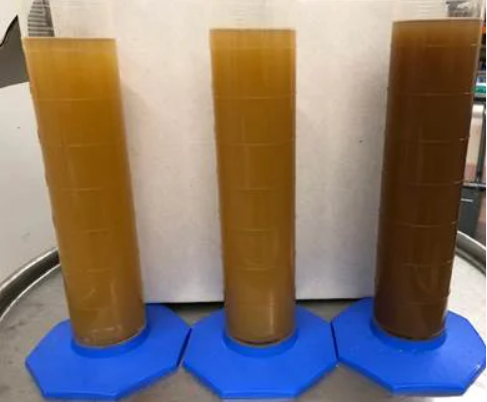
Because some solids are useful. They contain lipids that help yeast grow and complete fermentation, particularly once oxygen becomes limited. More turbid musts often ferment faster, while juice that has been clarified too aggressively can require closer management of oxygen and yeast nutrition additions.
There is no universal ideal. The Australian Wine Research Institute cites 50–150 NTU as a useful range for supplying yeast with sufficient lipids. It also describes a trial in which approximately 100 NTU gave the best balance between fruit expression, fermentation reliability and avoiding reductive aromas.
Some technical guidance for pet-nats suggests a somewhat clearer 30–80 NTU, partially because sediment produced by the fermentation will be retained in the bottle if undisgorged. These figures are reference points rather than recipes: grape variety, fruit condition, pressing, yeast, temperature and the intended wine style all matter. Some people also love to ferment on all the solids they can, the phrase “if it flows, it goes” has been heard when determining how to rack.
More clarification: precision and control
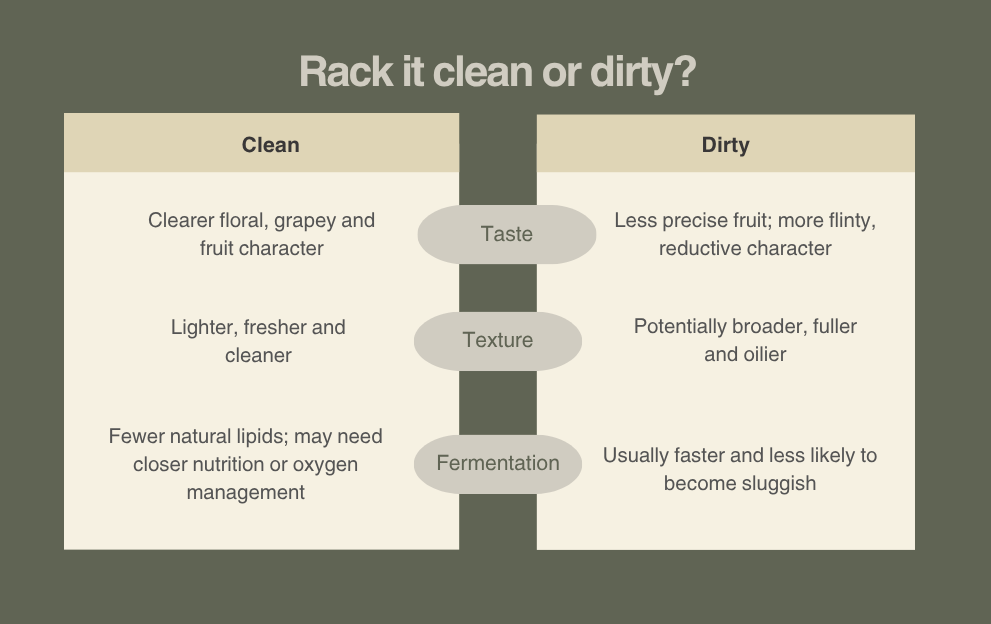
Fermenting clearer must generally favours a cleaner, more precise expression of the fruit. Removing more grape solids also removes material associated with oxidation, vineyard residues and some of the precursors of reductive aromas.
For an aromatic grape such as the Muscat Noir we are working with in Samos, that can help keep floral and red fruit character at the front of the wine rather than allowing fermentation character (a flinty reductive taste as well as the lees) to dominate it.
The trade-off is that very clear must can be a more demanding environment for yeast. With fewer naturally available lipids and nutrients, fermentation may be slower or less reliable unless oxygen, nutrients and temperature are managed carefully. More clarification can create a more controlled style, but it does not remove the need for active winemaking.
Less clarification: texture and fermentation character
Retaining more fine solids can support yeast and produce a faster fermentation. Research again by the AWRI has also associated higher-solids fermentations with more glycerol and polysaccharides, which can contribute to a broader or oilier impression in the finished wine.
But less clarification does not automatically mean more flavour or greater complexity. At high solids levels, wines can show lower concentrations of fruity esters, less distinct varietal character and a greater risk of reductive or sulphurous aromas.
The result may be more textural and fermentation-led, but also less precise and less predictable. The important distinction is between retaining useful fine solids and carrying over all the heavy material from pressing.
The main clarification techniques
The simplest technique is sedimentation: leave the must undisturbed and allow gravity and time to pull the heavier solids to the bottom. Cold settling uses the same principle, but keeps the juice chilled to delay fermentation and microbial activity while the solids settle. The clearer juice is then separated by racking, transferring it from above the sediment into another tank. Flotation reverses the process: tiny gas bubbles attach themselves to suspended particles and carry them to the surface, where the solids can be removed. It is much faster than settling, although it requires more equipment and generally represents a more interventionist approach.
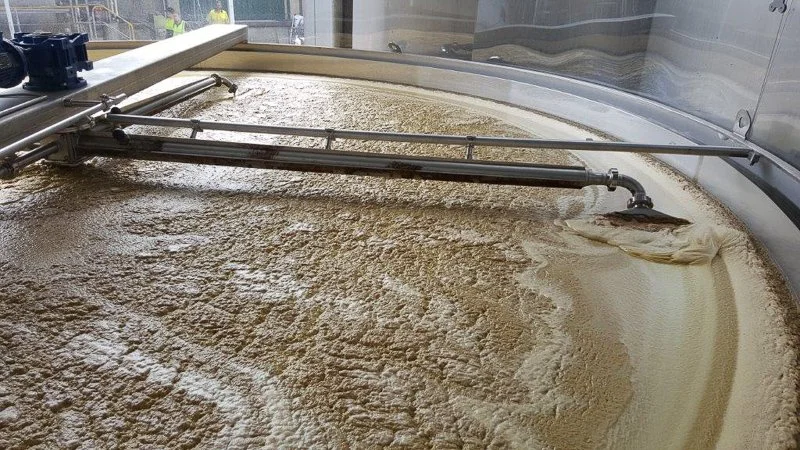
A delicious image of flotation, stolen from Wine Anorak, with the sediment on the top
Additions and products to speed it up
Grape must contains pectin, which helps keep small particles suspended and makes the juice harder to clarify. Pectolytic enzymes break this pectin down, allowing particles to join together and separate more easily. The enzymes do not remove the solids themselves; they make sedimentation, cold settling or flotation faster and more effective, often producing more compact lees and recovering more usable juice. Their effectiveness depends on factors including temperature, pH, grape variety and the time allowed before racking.
still wines
I’m putting this here as a placeholder more than anything, when we make a still white in the future, I’ll some more detail! Here the effect is relatively direct. A more clarified must is likely to produce a cleaner, brighter and more fruit-defined style. A less clarified must may give more weight and texture, with a greater influence from fermentation, but it brings an increased risk of muted fruit, reduction and variation between batches.
Clarifying the must does not determine whether the finished wine must be filtered, nor does it prevent later lees ageing. Yeast will multiply and form new lees during fermentation even when the starting juice is clear. Pre-fermentation clarification is simply the first decision.
sparkling wines
In the traditional method, the first fermentation is completed to make a dry base wine. That wine can then be clarified and stabilised before a measured addition of sugar and yeast begins a separate fermentation in bottle.
The character of the base wine still matters, but the yeast population and lees used to produce the bubbles can be controlled as a separate step. This is the main distinction between this two-fermentation process and the ancestral method’s single. Pét-nat works differently, using one fermentation. It begins in tank and the wine is bottled before it has finished, allowing the remaining grape sugar to ferment under closure and trap carbon dioxide.
This links the tank fermentation and bottle fermentation together. The condition of the must at the beginning therefore affects the same fermentation that must later finish safely and reliably inside the bottle.
A second decision: how much lees goes into the bottle?
This is related to must clarification, but it is not the same choice.
Even a well-clarified must produces yeast lees during fermentation. Before bottling a pét-nat or ancestral method, we could cool the ferment, allow more material to settle and rack the wine away from it but during ferment, the wine is moving around a lot so you’ll never get it fully clear, not that you’d want to. Bottling from clearer wine though carries less sediment forward; racking less selectively leaves more yeast and other particles in the bottle.
Some viable yeast must remain if fermentation is to finish in bottle, but that does not require transferring all the settled lees. The available sugar and living yeast in the solution create the carbon dioxide and pressure.
More lees can make the wine cloudier, fuller and more yeast-led, potentially adding creamy, savoury or bread-like character over time. It also creates more sediment for the drinker and can mask some of the fresh Muscat fruit.
Solids also provide sites from which carbon dioxide bubbles can form rapidly. Residual yeast lees is a factor that increases the risk of gushing in sparkling wine. More lees does not necessarily create more pressure, but it can make the bottle release its gas far more aggressively when opened.
Less lees should give a cleaner appearance, clearer fruit and more consistent opening behaviour. The practical challenge is to rack cleanly without leaving too few healthy yeast cells to complete fermentation. Pét-nat bottling therefore depends on measuring and managing yeast activity, remaining sugar and temperature—not simply judging cloudiness by eye.

The Vote!
For our sparkling Muscat, this vote is about how much we clarify the must before fermentation begins.
Do we settle it further for a cleaner, brighter and more fruit-led expression, or retain more fine solids for a broader, more textural and fermentation-led style?