Pet PRessure
The bubbles in many bottles of sparkling wine are created by fermentation. Yeast gobbles up any sugar and converts it into alcohol and carbon dioxide. If this happens in an open tank, most of the carbon dioxide escapes and floats off into the sky. If it happens after the wine has been sealed in a pressure-resistant bottle, the gas has nowhere to go. It accumulates in the headspace and dissolves into the wine.
When the bottle is opened, the pressure above the wine suddenly falls. Then the dissolved carbon dioxide is no longer in equilibrium and begins to escape the wine as bubbles.
As a rough guide, approximately 4 grams per litre of fermentable sugar produces 1 bar of pressure when it ferments in a sealed bottle. Champagne provides the standard example: its producers typically add 24 g/L of sugar at tirage to produce approximately 6 bars of pressure.
These are planning figures rather than guarantees because it assumes the sugar ferments fully and does not account for carbon dioxide already dissolved in the wine or hiding in the lees. Bottle size and headspace, alcohol, acidity and temperature also affect the outcome.
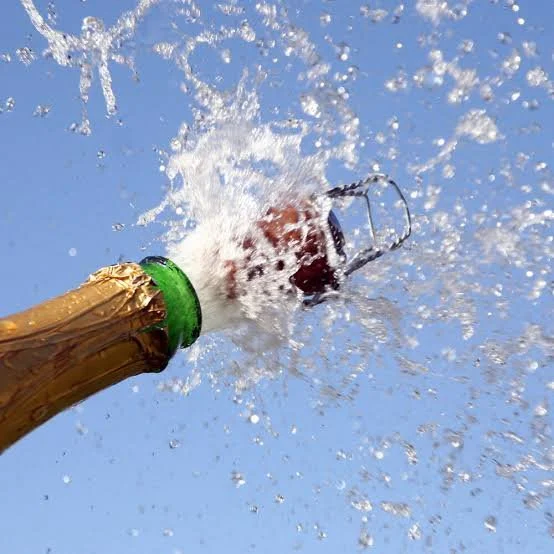
Pressure is normally stated as the excess pressure inside the bottle at 20°C. Temperature matters because colder wine can hold more dissolved carbon dioxide. As a bottle warms, carbon dioxide becomes less soluble and its internal pressure rises, hence the explosions and gushing you’re more likely to get when opening a warm bottle of bubbly.
As a broad reference, the International Organisation of Vine and Wine defines semi-sparkling wine as having between 1 and 2.5 bars of pressure at 20°C, while fully sparkling wine begins at 3 bars. Pet-Nat is somewhere between 2-4 Champagne is normally around 6 bars but there’s certainly a trend towards more ‘vinous’ low pressure traditional method sparklings at 5 bars more or less.
Traditional Method: A Controlled Second Fermentation
Calculating pressure is comparatively straightforward when using the traditional method, as is the way of the Champenois.
The grapes first undergo a normal alcoholic fermentation. That fermentation is allowed to finish, producing a dry, still base wine with mega acidity that destroys teeth. You then analyse, blend and stabilise the wine before adding a precisely measured liqueur de tirage containing sugar, a super strong yeast and usually yeast nutrients.
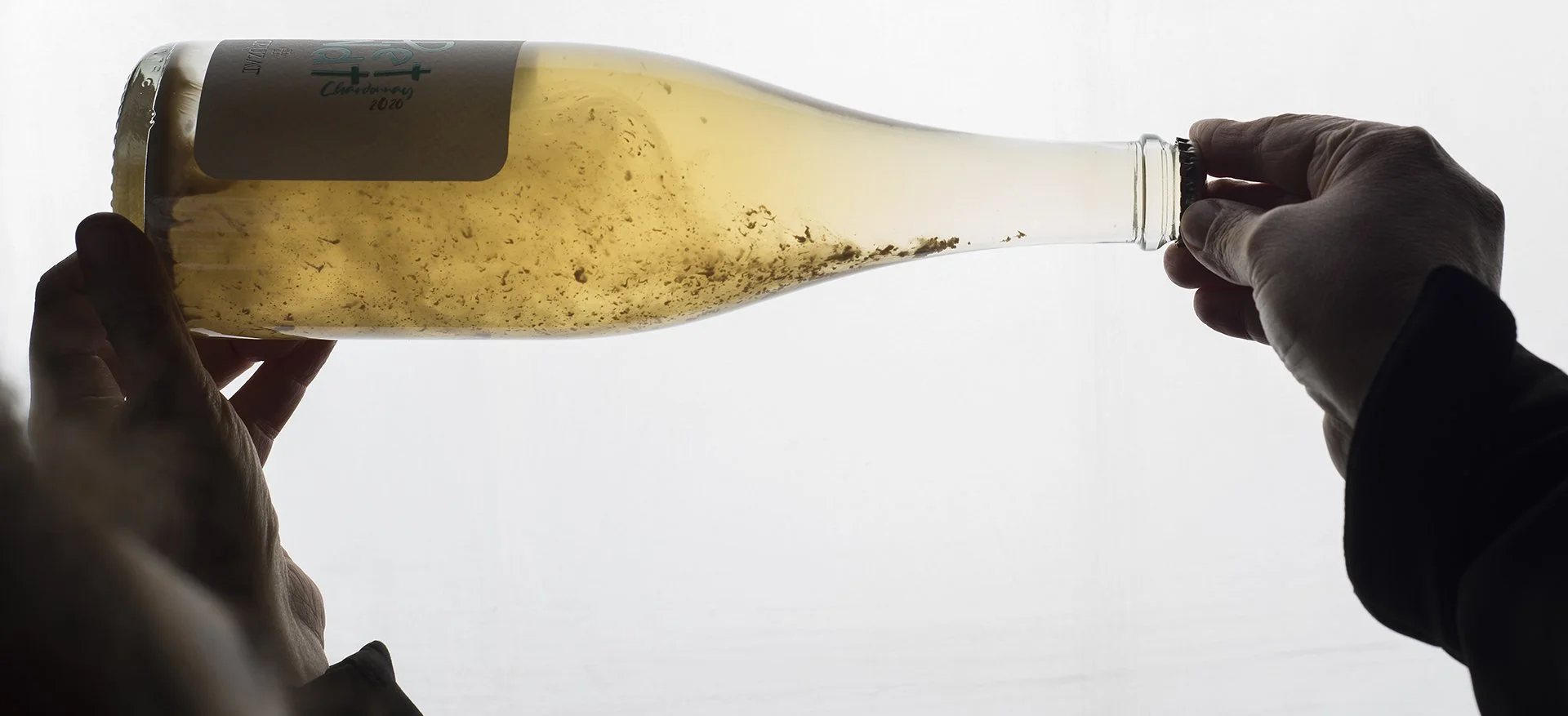
Because the base wine is already dry, you know exactly how much sugar is in the bottle. Adding approximately 12 g/L should create about 3 bars of pressure; 24 g/L should create about 6 bars. The bottle is sealed and the second fermentation converts that measured addition into alcohol and carbon dioxide.
After fermentation, the wine may remain in contact with the yeast lees for months or years. The bottles are then riddled and disgorged to remove the sediment before being topped up and closed with the final cork.
There are still variables, including yeast performance, temperature and losses during disgorgement, but the pressure calculation begins with a dry wine and a known sugar addition. That makes the process relatively controllable.
Ancestral Method: Bottling a Moving Target
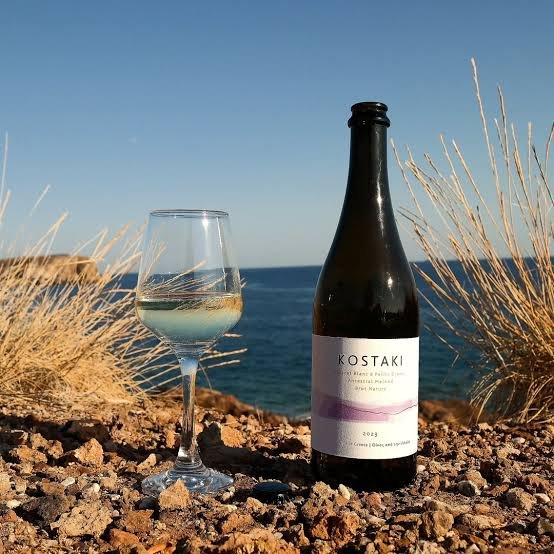
The ancestral method, now commonly associated with pét-nat, uses one continuous fermentation rather than two separate fermentations.
Fermentation begins in tank, but the wine is bottled before it has finished. The yeast then consumes the remaining natural grape sugar inside the sealed bottle, trapping the carbon dioxide it produces. In a strict ancestral process, and the way we’re going to do it, no tirage sugar is required, the pressure comes from the sugar already remaining in the wine.
The calculation is theoretically the same. If a wine is bottled with 12 g/L of fermentable sugar and then ferments completely dry, that remaining sugar could produce approximately 3 bars of additional pressure. The difficulty is that the sugar concentration is changing continuously. We’re not adding a known amount to a stable, dry wine; they are trying to capture an active fermentation at the correct moment.
The sugar calculation also only covers carbon dioxide created after bottling. A wine that is already actively fermenting will contain carbon dioxide produced in the tank, some of which remains dissolved in the liquid and lees. Traditional-method producers can minimise and measure the dissolved gases in a dry base wine before tirage. With pét-nat, bottling an active and often recently cooled fermentation makes the starting level less predictable.
Bottle too late and too little sugar remains, producing a lightly sparkling or almost still wine. Bottle too early and the wine may generate much more pressure than intended. If a fermentation is consuming 2 g/L of sugar per day, for example, a difference of one day represents roughly half a bar of potential pressure, so when you consider the logistics of having a team ready to bottle, precision is tricky . Our vote in Greece will be based on a target pressure so don’t shoot us if we don’t nail it exactly!
Bottling Date Becomes the Pressure Decision
For our ancestral, choosing the pressure means working backwards from the target. If we want around 3.5 bars, the simple calculation suggests bottling with approximately 14 g/L of fermentable sugar remaining. For 4 bars, it suggests approximately 16 g/L. For 4.5 bars, approximately 18 g/L.
We therefore need to follow the fermentation closely, measuring its density, even though density alone becomes a less precise guide near the end of fermentation because alcohol, temperature and suspended solids also influence the reading. But the practicalities of sending a wine off for enzymatic analysis of the fructose and glucose would take too long here.
The fermentation can be slowed by cooling the wine, giving time to settle it, rack it and prepare for bottling. Cooling does not necessarily stop fermentation permanently. Once the bottled wine warms again, viable yeast may continue consuming the remaining sugar.
Choosing Our Pressure
A lower-pressure wine will have a softer prickle, gentler mousse and usually less risk of gushing. A higher-pressure wine will feel livelier and more conventionally sparkling.
Our calculation therefore begins with the style we want:
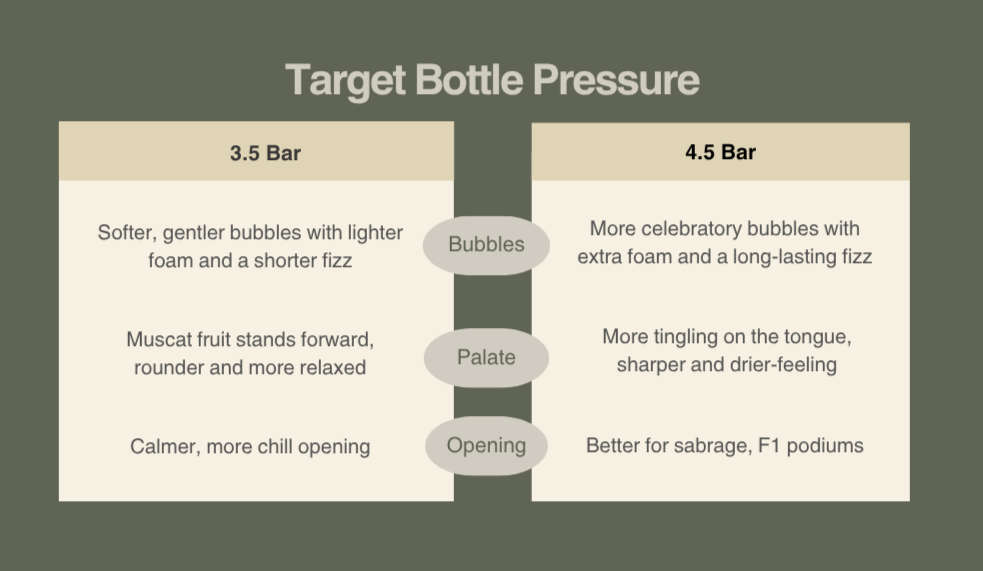
2–2.5 bars: soft and lightly sparkling
Around 3 bars: clearly sparkling but below typical traditional-method intensity
Around 4 bars: a firmer and more energetic pét-nat
5–6 bars: closer to full traditional-method pressure
Once we choose the target, the practical decision for us is when to bottle!