Massal Debate
When planting a vineyard for the first time there’s lots of decisions to be made. Which grape variety? Which rootstock? Row spacing? And, once you have settled on say, Muscat as Kostaki did, you need to the actual genetic material with which to plant, and for that, you have tow main options; Clonal or Massal.
Grapevines are almost never grown from seed. Instead, growers propagate them from existing vines using cuttings. Historically, that often meant walking through a vineyard, finding the vines that performed particularly well and using them to create the next generation. If a vine gave healthy fruit, ripened reliably, avoided disease or simply made particularly good wine, it was invited to reproduce.
That was the traditional way but more recently, vineyards have increasingly been planted with certified clones supplied by nurseries. The aim was sensible: healthier planting material, predictable performance and a vineyard that ripens more uniformly. However, it also narrowed the genetic diversity that had quietly accumulated within grape varieties over centuries.
Attack of the clones
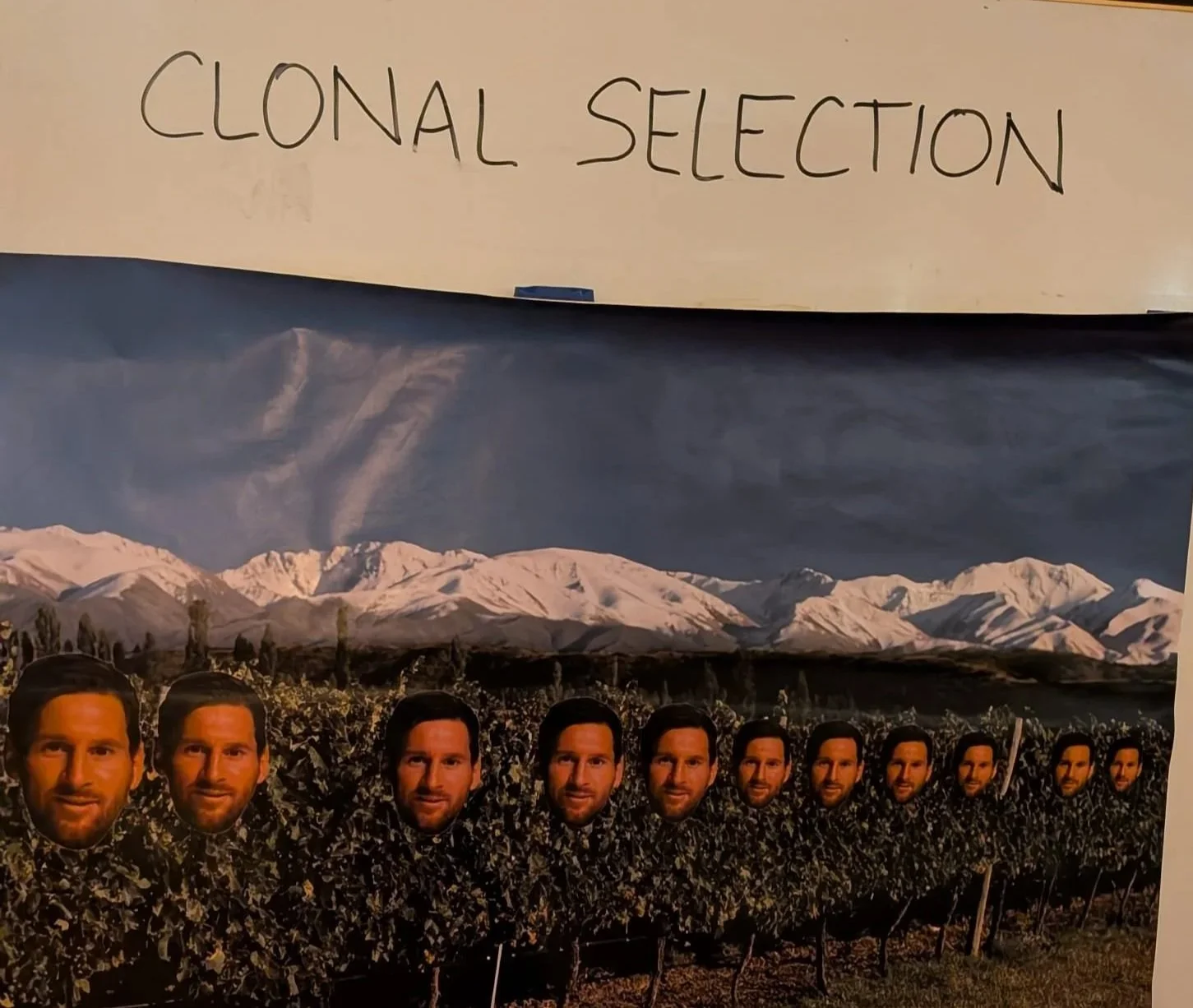
A clone begins with one vine that has shown desirable characteristics. It might produce small berries, loose bunches, good acidity, intense aromas, reliable yields or later-ripening fruit. Cuttings are taken and propagated, creating new vines that are genetically derived from that one parent.
It’s not genetic modification, nor is it a laboratory invention. The original vine has usually developed a natural mutation during its lifetime; humans have simply noticed something useful and copied it. A clonal-selection programme then observes the vine over several years, checks that its characteristics are stable and, for certified material, tests it for important diseases.
This had become the popular approach has oenolgy favoured consistency, everything ripens at the same time so you can pick a uiform crop.
The price of predictability
Clone choice can affect the vineyard and the wine. Different clones of the same grape variety may vary in vigour, yield, bunch compactness, berry size, ripening time, sugar, acidity and aromatic or phenolic composition.
This is particularly relevant to Muscat, where aroma is rather important. A three-year study of Muscat à Petits Grains Blancs clones found differences in cluster weight, yield, must sugar and pH, as well as the resulting wine composition. France currently recognises 13 certified clones of Muscat à Petits Grains Blancs, each selected because “Muscat” is not quite as uniform as the name suggests. Indeed the the guys at Kostaki sport a harvest t-shirt listing the 100+ names for Muscat.
Choosing a clone can therefore push a vineyard towards a particular style. A later-ripening clone might help retain acidity in a hot site; a looser-bunched clone may be less vulnerable to rot; a lower-yielding, more aromatic clone could favour intensity over volume. Here, where the 4 available clones has largely been propogated for the island’s sweet wines, meant that Evmorfia chose the one that retained the most acidity, without developing such an intense aromatic quality.
However, a clone is not a flavour setting. Soil, weather, vine age, farming, harvest date and winemaking still matter enormously. Planting the same clone in Samos and Sussex would not produce the same wine. It simply makes one part of the equation more predictable.
Practical Considerations
The greatest advantage of certified clonal material is often health rather than flavour. Nursery vines can be inspected and tested for viruses and virus-like diseases before planting, reducing the risk of filling a new vineyard with infected material. Uniform growth and ripening also make pruning, spraying and harvesting easier.
The trade-off is that a vineyard planted with one clone has a narrow genetic base. If every vine ripens at the same time, responds poorly to drought or proves particularly susceptible to a future problem, there is little variation in the vineyard to soften the blow. It also means that the characteristics not chosen today may be lost for tomorrow.
Clonal selection gives the grower greater control—but places a lot of faith in one selected vine.
Massal Selection
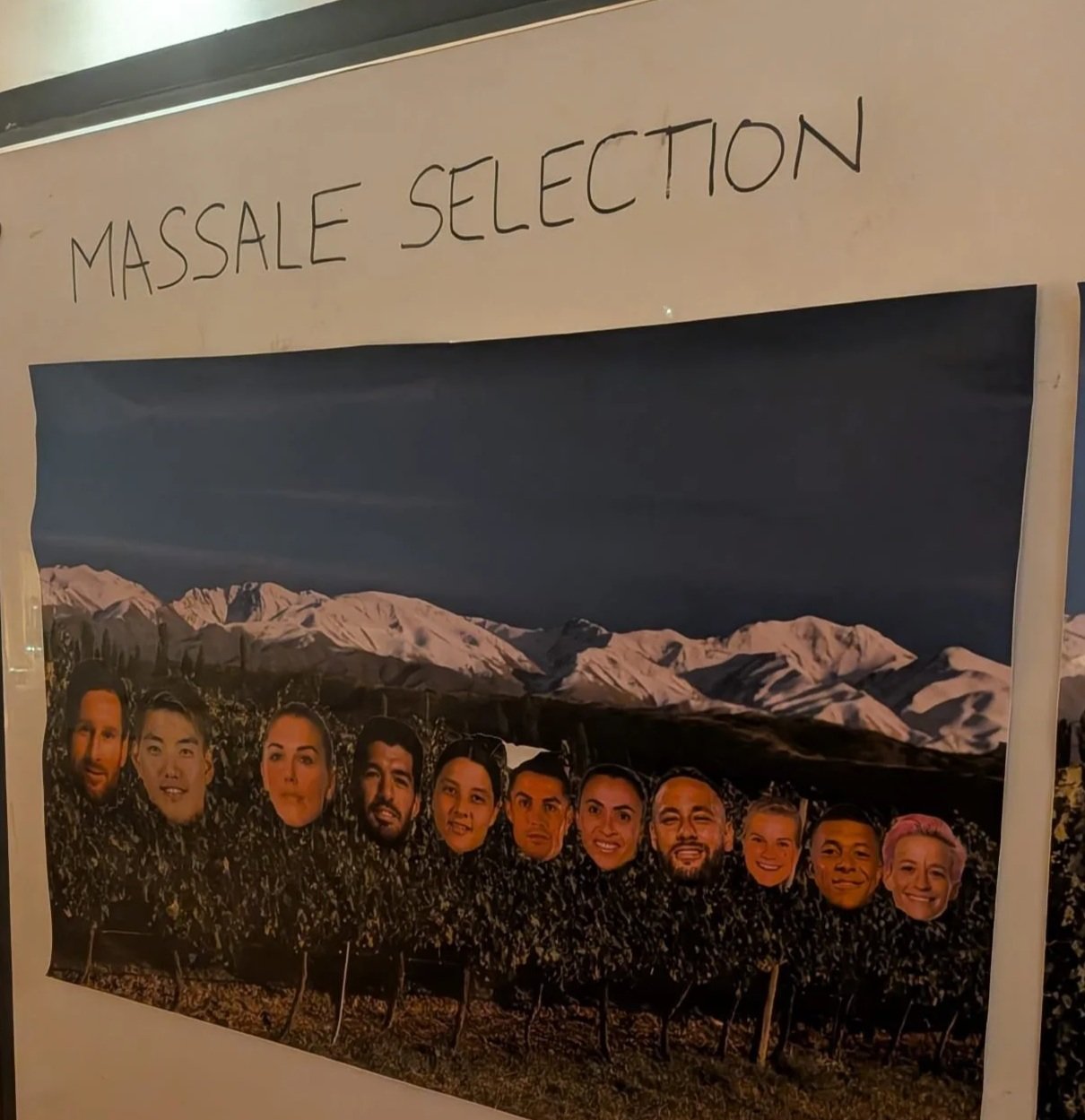
Massal selection starts in an existing vineyard rather than a nursery catalogue. The grower observes the vineyard over several seasons and identifies numerous healthy vines with desirable qualities. Cuttings are then taken from this group and used to plant or replenish another vineyard.
The resulting vines remain the same grape variety, but they are not all copies of one individual. Each selected vine may have accumulated slightly different mutations over its lifetime and may behave a little differently.
Diversity and Complexity
Instead of choosing one ideal version of Muscat, massal selection preserves a population. Some vines may ripen slightly earlier, some retain more acidity, some carry looser bunches and others may produce more intensely aromatic fruit.
That diversity can act as an insurance policy. In a hot year, the later-ripening vines may prove valuable; in a cooler year, the earlier ones may fare better. Research into old grape varieties has found meaningful variation within the same variety in yield, sugar, acidity and tolerance to environmental stresses, traits that could become increasingly useful as the climate changes.
It may also give the winemaker a broader range of fruit to work with. Grapes with slightly different ripeness, acidity and aromatic profiles all arrive in the same vat, which could contribute to a more layered wine.
The word could is important. Massal selection does not automatically make a wine more complex, just as a clone does not automatically make one boring. Site and farming matter, and a badly selected massal vineyard is merely a diverse collection of bad decisions.
Practical Considerations
Proper massal selection takes time. A vine that looks brilliant for one season may simply have enjoyed a lucky year, so growers need to observe candidates across several vintages. Each vine must be assessed for yield, fruit quality, ripening and health before it earns a place in the next vineyard.
Health is the biggest risk. A cutting carries the qualities of its parent vine, but it can also carry its viruses. Modern massal programmes can test the selected vines before propagation, combining genetic diversity with cleaner material, but that adds time and expense.
The finished vineyard may also be less uniform. Vines can grow and ripen at different rates, making vineyard work and picking decisions more complicated. That variability is either the point or the problem, depending on your philosophy.
The Black Sheep of the Kostaki Family
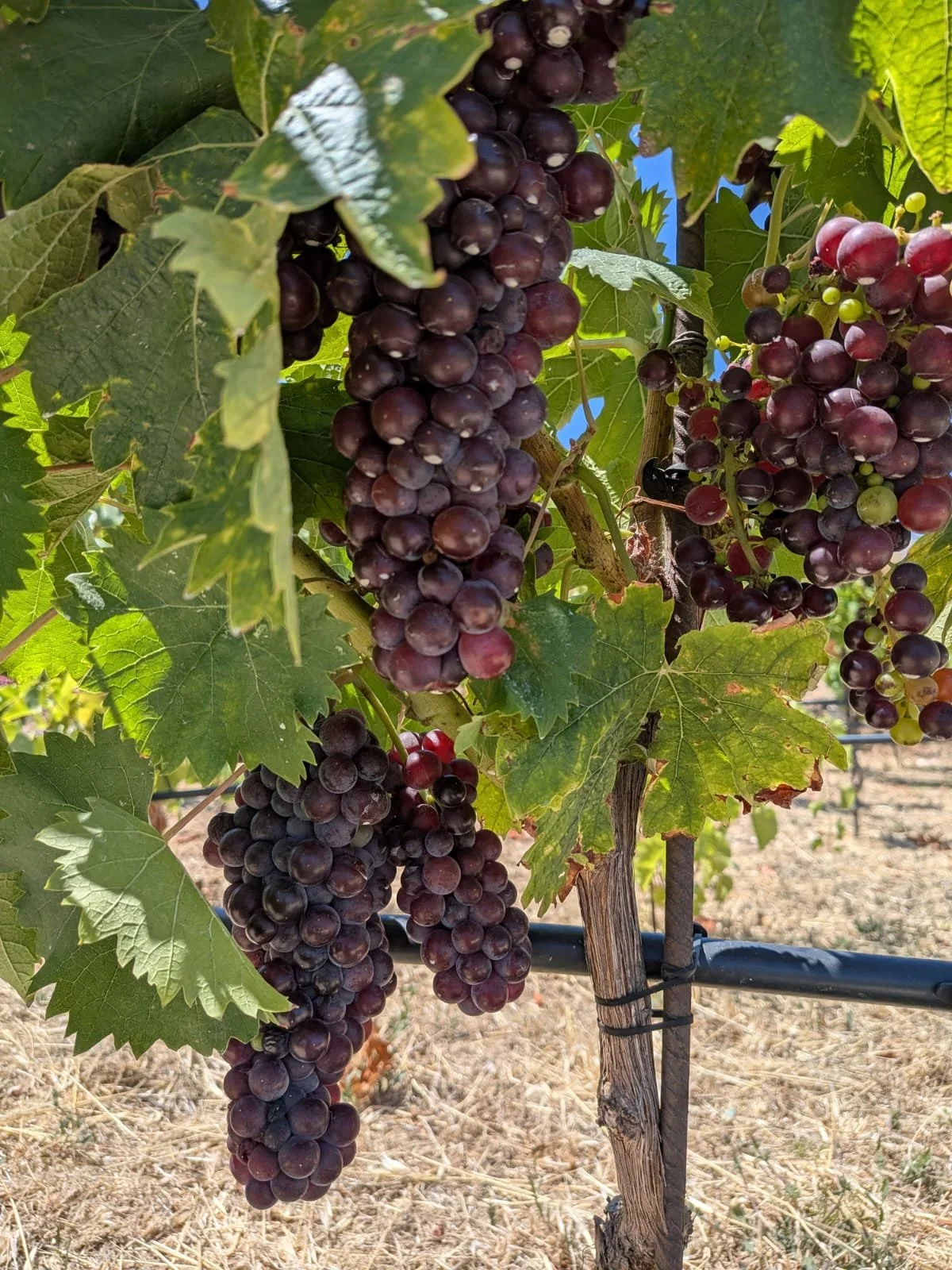
In fact Kostaki’s black Muscat provides a rather literal example of how a new vine population can begin.
White Muscat à Petits Grains dominates Samos, but grapevines naturally mutate. At some point, a member of the Kostaki family spotted a dark-skinned bunch growing on a white Muscat vine, I can’t remember the exact relation but I’m going to say godfather of a grandfather. Rather than ignoring the oddity, the family propagated material from the mutated shoot.
Cuttings were passed down through generations of the vinegrowing members of the family and the black Muscat survived. Strictly speaking, the first vine propagated from that mutated shoot was a clone. It became a massal family population when later plantings were made using material collected from several of its descendants around the family, rather than one certified nursery source.
Without that informal selection, the black Muscat we are now considering for our wines might no longer exist. Genetic diversity can sound rather abstract until it appears as a black bunch in a sea of white grapes. For our clonal vs massal vote now though, we’re focussing on the white Muscat a Petit Grains, for which they have chosen to use both methods!
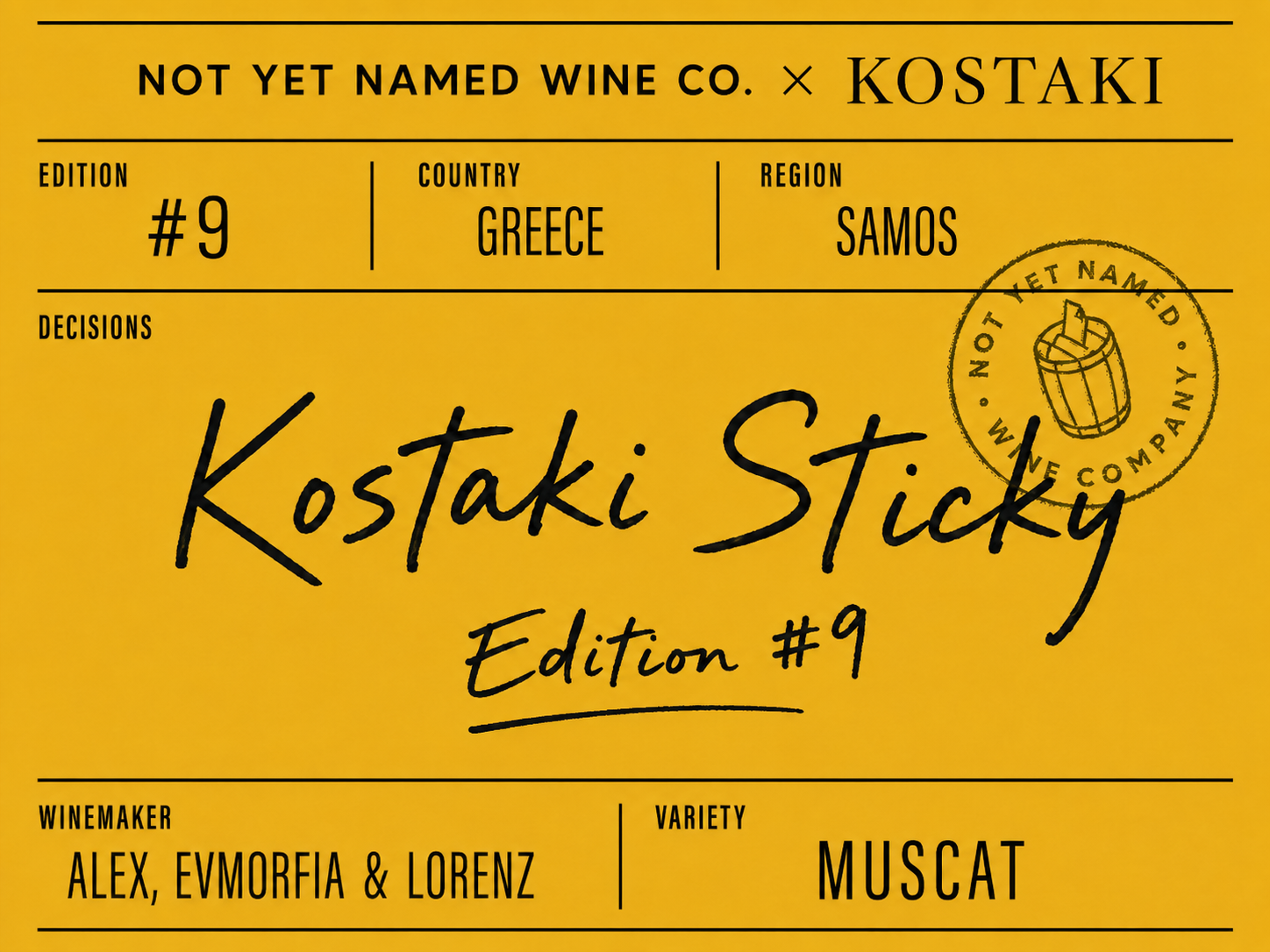
Crowd fund a sweet wine!
Samos is famous for it’s dessert wine Muscats. Everybody loves them but rarely buy them so I’m not convinvced there’s a sound commerical logic for it. However, if we sell a few hundred bottles then I’ll be wrong and delighted to make one!
If we get to 300 bottles (375ml) we will share a barrel with Kostaki, if we sell loads then we’ll get our own :)