vintage #8 with Karim mussi, Argentina
the argentina alliance
We are chuffed to bits to announce that, for our 8th vintage in 2026, we’re heading back to South America to work with the maverick Karim Mussi, a winemaker whose passion and car journeys span the entirety of Argentina.
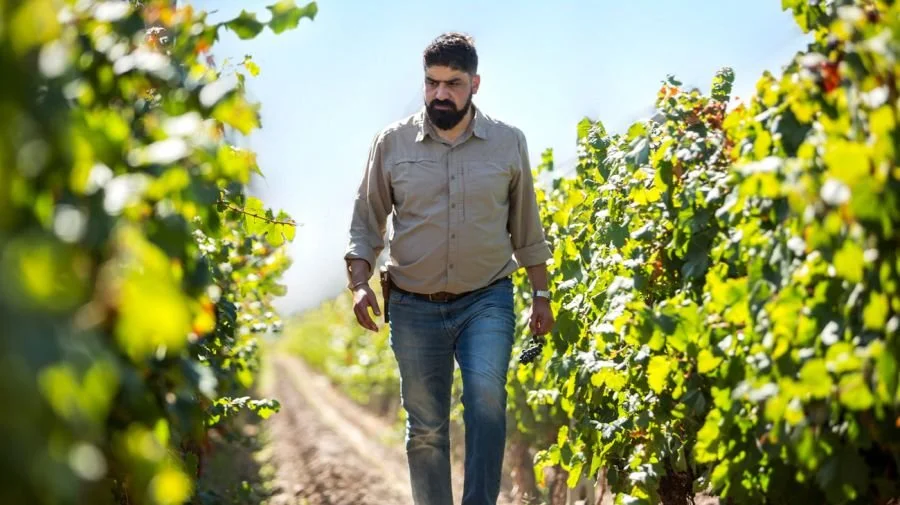
He’s not the kind of guy who stays rooted to one vineyard. He has spent his career exploring country from top to bottom. His wines cross multiple regions along the Andes, from high-altitude vineyards in the north to the famous valleys of Mendoza, even venturing into Patagonia.
Through his brands Altocedro, Alandes and Abras (and others), he expresses different soils, climates and winemaking methods. Each wine is a little geography lesson demonstrating the full diversity the country has to offer.
That’s closely aligned with what Not Yet Named tries to do with democratic winemaking: giving you access to whatever direction you choose to take the wine.
HOW IT STARTED
For Karim, it all started in La Consulta, where I’ll be based too, a region historically loved by locals but, back then, barely known outside Argentina. He arrived when land was cheap, drawn in by the opportunity to get his foot on the ladder, however, La Consulta still had some of the country’s few surviving old vineyards, many untouched since pre-phylloxera days. He poured everything he had into putting the place on the map.
He refurbished an old British-built winery with high ceilings, thick mud-brick walls, and pine trees surrounding it. Inside were the original concrete tanks, which turned out to be one of the most important tools for the style he favours. Concrete gives natural temperature insulation, guarding against the rollercoaster ferments that can happen with wild yeast. The broad, low shape of the tanks increases skin contact too, letting him extract the unusually high phenolics possible in this part of Argentina while still maintaining those silky tannins.
After the success of Altocedro, he pushed further north to Cafayate, setting up operations in Salta where the Abras wines are made, another extreme landscape, and a new opportunity to explore what Argentine terroir can do. But moving north unlocked something else, the idea for the Alandes range.
Alandes is a concept of wines drawn from sites all along the Andes. On the eastern, rain-shadowed side of the mountains, the land is a vast desert, otherwise completely dry but irrigated with snow melt, stretching through nine different provinces. Alandes is his exploration of the edges of winemaking territory, embracing classic Bordeaux flavours often but blending across a long, continuous thread of sites.
freedom and experimentation
With Karim’s portfolio, you don’t get one style. Across his many labels you’ll find classic varietal Malbecs, elegant Bordeaux-style blends (red and white), and even barrel-aged rosé.
His Paradoux red blend, for example, is a multi-variety, multi-vintage Bordeaux-inspired red, while Altocedro focuses on single-varietal wines that emphasise terroir and purity. You can see from his personal journey that Karim explicitly embraces a philosophy of freedom, what he calls “a territory without borders.” He’s comfortable mixing grapes from different valleys, playing with blends, embracing multi-vintage wines, and letting wines become the best they can be rather than forcing conformity. This somewhat rebellious, un-dogmatic approach, questioning the status quo, fits perfectly with our democratic winemaking ethos.
I also hear he’s a passionate conversationalist, happy to dive into world politics, current events, 17th-century British philosophy, and ‘70s rock (The Doors and Led Zeppelin are favourites.) So I’m looking forward to passing on a few of those stories and seeing whether any tenuous puns break on through into my emails.
South America is rightly known as predominantly a red-wine continent, with Malbec, Cabernet Sauvignon and Tannat dominating reputations. But its diverse terroirs are equally capable of producing outstanding white wines, and more winemakers are now exploring that potential with thrilling results.
For me, the wine that opened my eyes was the Alandés Paradoux Blanc, an Argentine take on the classic Bordeaux blend of Sauvignon Blanc and Semillon. It was spectacular, and even more impressive for its non-vintage nature. For reasons unknown to me, blending across multiple years is considered a sin everywhere except Champagne. As someone who loves experimentation, I immediately thought this could inspire one of our most interesting, and controversial, member votes yet.
I had asked Amanda Barnes (recently crowned MW and author of the South American Wine Guide) for guidance in choosing a partner for this Argentina vintage. This is what she has said about this wine:
“This is hands down one of my favourite white wines in Argentina at the moment: bold, rich, leesy and yet fresh, vibrant and full of fresh fruit, herbal and mineral aromas. Perhaps the most compelling interpretation of this style is Alandes Paradoux Blanc by Karim Mussi. Fermented and aged in French oak and on the lees, it offers richness, depth and layered complexity. A nod to the top white wines of Pessac-Léognan, yet unmistakably Uco Valley in character. Its floral perfume and herbal vibrancy set it apart. Intriguingly, Mussi blends multiple vintages, embracing the creative freedoms afforded by New World winemaking.”
Semillon has a long history in Argentina, and in many ways it’s one of the grapes most naturally adapted to La Consulta, and its presence there is why Karim started working with it. The old vineyards he found were planted to a wonderfully golden, thick-skinned ‘yellow’ Semillon, a variety that shrugs off disease and can hang longer on the vine. That extra time gives the grapes the weight, structure and richness needed for the kind of reserva-style white wines he imagined. Wines able to take on both barrel and bottle age.
He ferments his Semillon in barrel, typically a blend of around 66% Semillon, basket-pressed, always with indigenous yeast. During fermentation, he works the lees hard: bâtonnage up to three times a day. Or rather, ‘paletage’, because batons are too French. The wines rest for a year in barrel, but even that wasn’t enough for Karim. He wanted more time and evolution. So he developed his own extended-aging rhythm: new barrels are emptied each year to receive the fresh juice, while the previous vintage moves into larger barrels to continue aging at a slower pace. It’s a clever way of deepening the wine and allowing fermentation to happen in barrel.
In Argentina, the vintage-to-vintage variation isn’t as dramatic as in cooler or wetter regions, so he doesn’t feel there is much to lose from a vintage. The final blend for this wine is built almost like a solera system, drawing on different parcels across years to create something layered, textural and quietly complex. A Semillon that showcases not just of a single harvest, but of the ongoing story of La Consulta itself.
Also worth noting: his barrel-aged rosé is not in the UK but something I very much like the sound of…
what to expect from our not yet named vintage
This collaboration will give our community access to one of Argentina’s most exciting, philosophical and terroir-driven winemakers. You can expect freedom, experimentation, regional expression There will be some big decisions to vote on, potentially including regional decisions, an immense range of varieties, and maybe even some controversial multi-vintage blending.
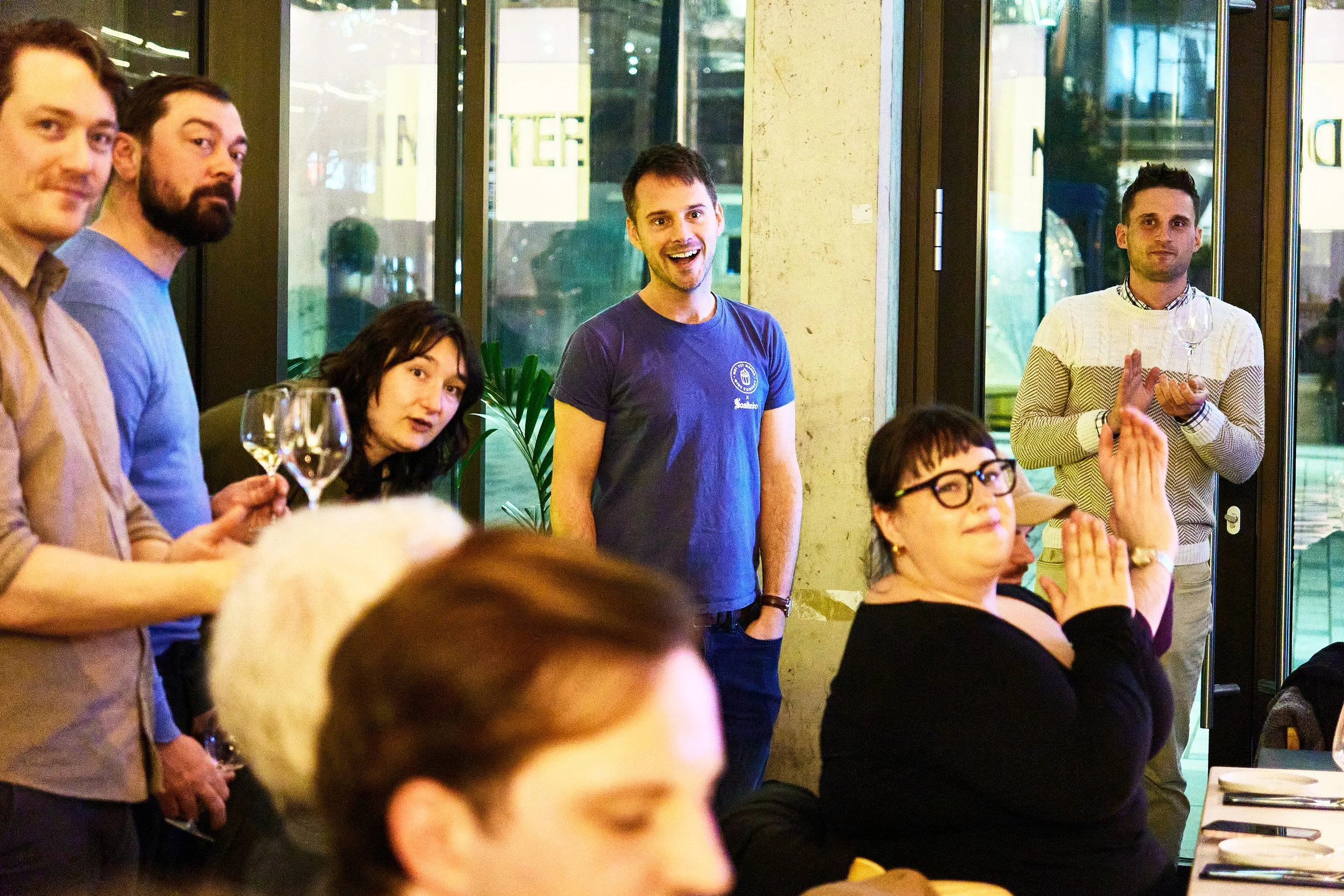
Join Not Yet Named Wine Co. and become part of a wine club where you make the decisions.
You’ll follow each vintage and vote on every winemaking decision as well as the democratically designing a piece of art for the label.
6 BOTTLES NOW!
Receive your first six-bottle case as soon as you join. After that, you can use your credit to order wine whenever you want!
MIX YOUR CASE
Choose from the wines we have made before and build a case to suit you.
EXTRA SUBSCRIBER BENEFITS
Influence the additional wines we make for shops, bars and restaurants
See wines you helped create out in the wild
10% off additional wines, events and merchandise
Invitations to tastings, pick-up parties and school trips
Follow every vintage and track your votes through the app